


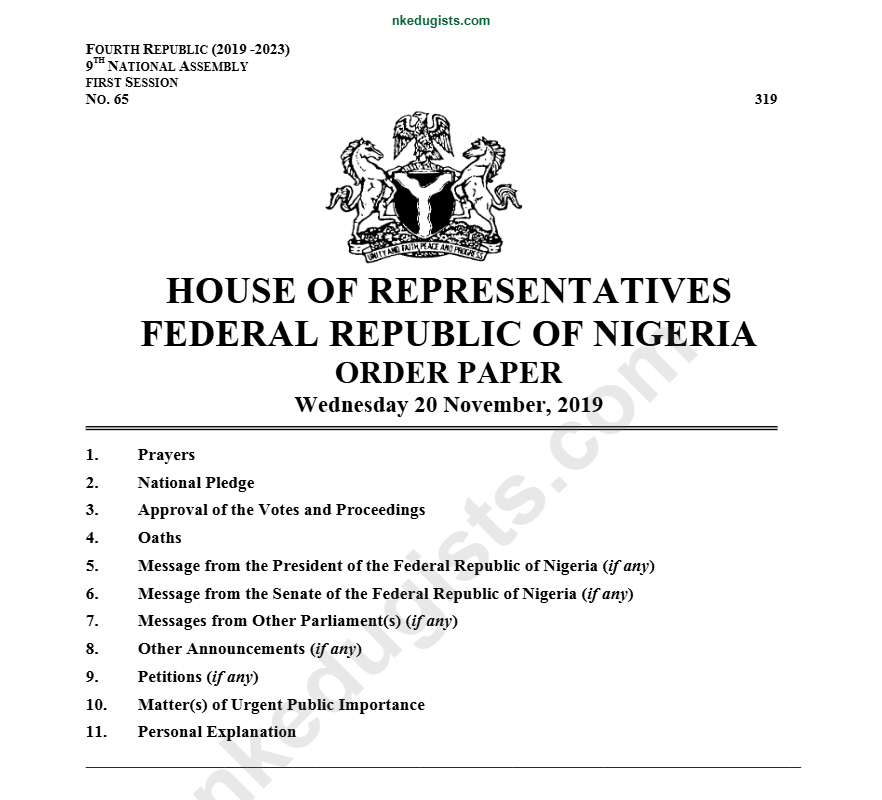
The Abolishment Of Acceptance Fees in Nigerian universities has been a subject of public discussion for years. Many admission seekers and parents have called on the Federal Government and the National Universities Commission (NUC) to stop universities from demanding non-refundable acceptance fees after offering candidates admission.
However, acceptance fees have not been abolished across all federal universities in Nigeria. Universities still publish their own acceptance fee schedules, and the amounts differ from one institution to another.
Has NUC Ordered Federal Universities to Stop Collecting Acceptance Fees?
There have been reports and public discussions about Abolishment of acceptance fees in federal universities. However, Nkedugists could not verify an official NUC circular implementing a nationwide ban.
In November 2019, the House of Representatives called on the Federal Ministry of Education and NUC to abolish acceptance fees in tertiary institutions. This was a legislative resolution calling for action; it did not, by itself, establish that the fees had been abolished.
The issue remains relevant because acceptance fees can add to the financial pressure on families already paying for examinations, admission processes and other registration charges.
Federal Universities Still Collect Acceptance Fees
Recent official admission notices show that some federal universities continue to charge acceptance fees.
Examples include:
- University of Ibadan (UI): ₦50,000 for candidates offered admission in the 2026/2027 session. Read more about UI.
- Alex Ekwueme Federal University, Ndufu-Alike (AE-FUNAI): Its published 2026/2027 schedule lists ₦52,000 for many programmes, with higher amounts for some courses.
- Federal University Oye-Ekiti (FUOYE): Its published 2025/2026 registration instructions list an acceptance and clearance processing fee of ₦90,000.
These examples show that acceptance fees are still being charged. The amount and payment deadline depend on the university and admission session.
Why Are Students Calling for the Abolition of Acceptance Fees?
The main concern is the additional cost placed on newly admitted students. After paying for JAMB registration, O’Level examinations and other admission-related expenses, candidates may still have to pay an acceptance fee within a short period to secure their admission.
Students and parents who support abolition argue that:
- Acceptance fees increase the financial burden on newly admitted students.
- Short payment deadlines can make it difficult for families to raise the required money.
- Non-refundable payments can create additional problems for candidates who later decide not to accept an admission offer.
- Removing the charge could make admission more affordable.
Do All Federal Universities Charge Acceptance Fees?
No. Acceptance fee policies differ between universities. Some institutions may not charge a separate acceptance fee, while others require newly admitted students to pay one before completing registration.
Candidates should check the admission and payment instructions published by their chosen university for the relevant academic session.
What Is the Difference Between Acceptance Fee and School Fees?
An acceptance fee is a payment required by a university to confirm that a newly admitted candidate accepts the admission offer. School fees cover the institution’s approved student charges for the academic session.
They are separate payments, although the university may require candidates to pay both at different stages of registration.
Will Acceptance Fees Be Abolished in Nigeria?
There is no verified nationwide abolition of acceptance fees in Nigerian universities as of November 2026. The 2019 House of Representatives resolution called for their abolition, but current university payment notices show that the charges remain in use.
Any confirmed national policy change should be announced through official government, NUC or university channels.

3 Comments
It would be a great achievement of all time if really abolished.
For sure
The best idea so far,I pray it stands.federal universities is fast turning into mini private institutions