


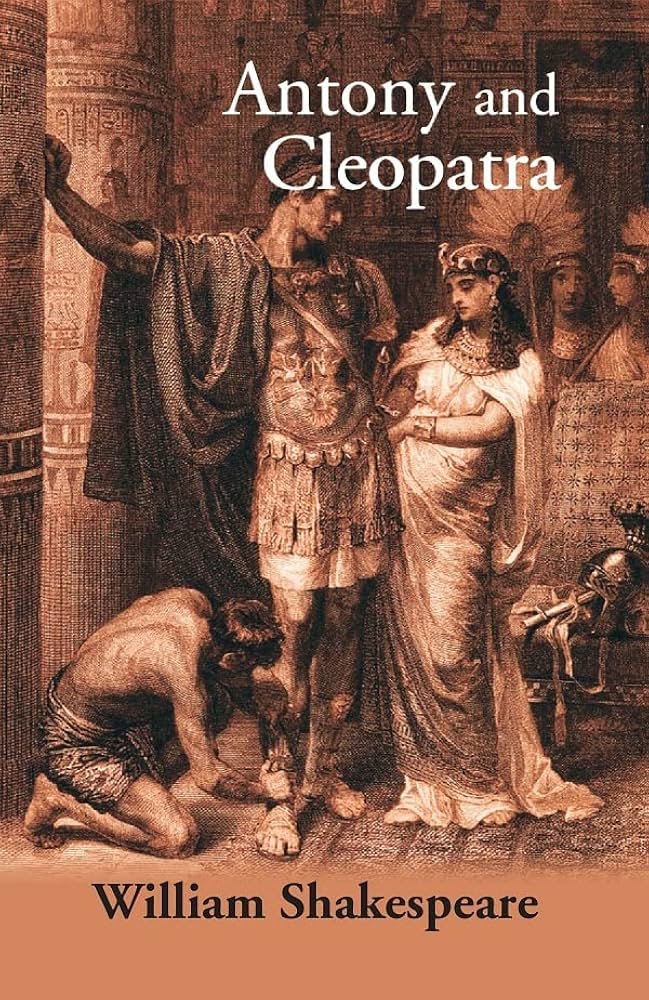
Antony and Cleopatra Summary, Antony and Cleopatra is a tragedy written by William Shakespeare. It tells the story of Mark Antony, a Roman leader, and Cleopatra, the Queen of Egypt. Their relationship creates conflict between love and political responsibility, eventually leading to the downfall of both characters.
The play explores love, power, ambition, loyalty, betrayal, leadership and the consequences of personal decisions. It is based on historical events but presents them through Shakespeare’s dramatic interpretation.
Brief Summary of Antony and Cleopatra
Mark Antony is one of the three rulers of the Roman world, alongside Octavius Caesar and Lepidus. However, Antony spends much of his time in Egypt with Cleopatra, neglecting his political responsibilities in Rome.
When Antony learns that his wife, Fulvia, has died and that political matters require his attention, he returns to Rome. To strengthen his relationship with Caesar, Antony marries Caesar’s sister, Octavia.
The marriage does not last as a lasting solution to their political disagreements. Antony eventually returns to Cleopatra in Egypt, causing further conflict with Caesar. Caesar sees Antony’s actions as a threat and prepares for war.
During the Battle of Actium, Antony chooses to follow Cleopatra’s retreating ship instead of remaining with his forces. This decision weakens his position and contributes to his defeat.
As Caesar’s forces gain the advantage, Antony’s supporters begin to desert him. Enobarbus, one of his most trusted followers, leaves but later regrets his decision and dies.
Antony eventually loses his military position and dies. Cleopatra is captured by Caesar but refuses to become part of his victory celebration. She also dies, bringing the tragedy to an end. Check pdf of Antony and Cleopatra
Summary of the Five Acts of Antony and Cleopatra
Act One: Antony’s relationship with Cleopatra
The play opens in Egypt, where Antony is spending time with Cleopatra. His Roman responsibilities are being neglected, and his followers are concerned about his behaviour.
Antony receives news that his wife, Fulvia, has died and that political problems in Rome require his attention. He decides to return to Rome, although Cleopatra is unhappy about his departure.
Literary significance: The first act introduces the conflict between love and duty. It also establishes Antony’s divided attention between Egypt and Rome.
Act Two: Antony’s marriage to Octavia
Antony returns to Rome and meets Caesar and Lepidus. The three leaders attempt to settle their disagreements and deal with Pompey, who threatens their power.
To strengthen the relationship between Antony and Caesar, Antony agrees to marry Octavia, Caesar’s sister. However, Enobarbus believes the marriage will not keep Antony away from Cleopatra for long. Cleopatra later learns about Antony’s marriage and becomes angry.
Literary significance: This act develops the political conflict and shows that Antony’s marriage is mainly an attempt to maintain political unity rather than a lasting personal commitment.
Read: A Midsummer Night’s Dream
Act Three: The conflict between Antony and Caesar
The relationship between Antony and Caesar continues to deteriorate. Caesar takes action against Lepidus, removing him from their political arrangement.
Antony prepares for war against Caesar. Despite advice from his officers to fight by land, he decides to fight by sea, with Cleopatra’s support.
During the Battle of Actium, Cleopatra’s ship retreats. Antony turns his ship to follow her, leaving his forces in a difficult position. His decision contributes to his defeat.
Literary significance: This act marks a major turning point in the tragedy. Antony’s decision at Actium demonstrates how his personal attachment affects his military judgement.
Act Four: Antony’s defeat and death
Antony continues his struggle against Caesar but gradually loses support. Enobarbus leaves him and joins Caesar’s side.
However, Antony treats his former follower generously by sending his belongings after him. Enobarbus feels ashamed of his betrayal and later dies expressing regret.
Antony experiences further military setbacks. After receiving false information that Cleopatra is dead, he loses hope. He dies after a failed attempt to end his life.
Literary significance: This act shows the consequences of Antony’s decisions and the collapse of his political and military power. It also develops the theme of loyalty through Enobarbus’s regret.
Act Five: Cleopatra’s death and the end of the tragedy
Cleopatra is taken into Caesar’s custody. She fears being displayed as a prisoner during Caesar’s victory celebration.
She eventually dies rather than submit to that humiliation. Her death ends the relationship between the two central characters and completes the tragedy.
Literary significance: The final act brings the tragedy to its conclusion. It presents Cleopatra’s determination to retain her dignity and shows the complete victory of Caesar.
Major Characters in Antony and Cleopatra
| Character | Description |
|---|---|
| Mark Antony | A Roman leader and one of the central characters. His love for Cleopatra conflicts with his political responsibilities. |
| Cleopatra | Queen of Egypt and Antony’s lover. She is intelligent, influential, emotional and politically ambitious. |
| Octavius Caesar | Antony’s political rival. He is strategic, disciplined and determined to control Rome. |
| Enobarbus | Antony’s loyal follower who later deserts him but regrets his decision. |
| Octavia | Caesar’s sister and Antony’s wife. Her marriage is intended to strengthen the relationship between Antony and Caesar. |
Literary Terms in Antony and Cleopatra
These are important literary terms candidates should understand when studying the play on Antony and Cleopatra Summary.
| Literary term | Meaning and example from the play |
|---|---|
| Genre | The type of literary work. Antony and Cleopatra is a tragedy because the central characters experience downfall and death. |
| Form | The way a literary work is presented. The play is a drama written mainly in verse, with some prose. |
| Plot | The arrangement of events in a story. The plot follows Antony’s relationship with Cleopatra, his conflict with Caesar and their eventual downfall. |
| Setting | The time and place of a story. The play moves between places such as Egypt and Rome, reflecting the political and personal conflict. |
| Protagonist | The central character or characters. Antony and Cleopatra are the main protagonists. |
| Antagonist | A character or force that opposes the protagonist. Caesar is Antony’s principal political opponent. |
| Tragic hero | A major character whose choices and circumstances lead to a tragic downfall. Antony is commonly studied as the tragic hero. |
| Tragic flaw | A weakness or error in judgement that contributes to a tragic hero’s downfall. Antony’s divided loyalties and poor decisions are often interpreted as tragic weaknesses. |
| Conflict | The struggle between opposing characters, ideas or forces. The play presents political conflict between Antony and Caesar, as well as the conflict between love and duty. |
| Characterisation | The way a writer presents a character’s personality. Shakespeare presents Antony as a powerful but divided leader and Cleopatra as a clever and influential queen. |
| Dramatic irony | A situation in which the audience knows something that a character does not. Antony believes Cleopatra is dead, although the audience knows that the report is false. |
| Foreshadowing | Hints about events that will happen later. Early warnings about Antony’s divided loyalties suggest that his relationship with Cleopatra may affect his future. |
| Imagery | The use of descriptive language that appeals to the senses or creates pictures in the mind. Enobarbus’s description of Cleopatra’s beauty and presence uses vivid imagery. |
| Symbolism | The use of an object, person or event to represent a wider idea. The contrast between Rome and Egypt can symbolise discipline and political duty on one side, and pleasure and personal freedom on the other. |
| Contrast | The presentation of differences between characters or ideas. Antony’s military reputation in Rome contrasts with his behaviour in Egypt. |
Major Themes in Antony and Cleopatra
1. Love and duty
The play presents the conflict between personal love and public responsibility. Antony loves Cleopatra, but he is also expected to serve Rome as a political and military leader. His struggle to balance these responsibilities contributes to his downfall.
2. Power and ambition
Power is a major concern throughout the play. Antony and Caesar struggle for control of the Roman world, while Cleopatra works to protect her position as Queen of Egypt. Their ambitions influence their decisions and relationships.
3. Loyalty and betrayal
Loyalty is tested throughout the play. Enobarbus initially serves Antony faithfully but later deserts him. He eventually regrets his decision. His experience shows the importance of loyalty and the consequences of betrayal.
4. Fate and free will
The characters sometimes speak as though their lives are controlled by fate. However, their personal decisions also influence what happens to them. Antony’s decision to follow Cleopatra during the Battle of Actium is an important example of how individual choices shape the tragedy.
5. Leadership and responsibility
Antony’s position requires discipline, sound judgement and commitment to Rome. His personal relationship with Cleopatra affects his ability to meet these responsibilities. Caesar, on the other hand, is presented as a more calculating political leader.
6. Honour and reputation
Antony is concerned about his reputation as a respected Roman leader. As he loses political and military power, he struggles with the loss of honour. Cleopatra also wants to preserve her dignity rather than become a symbol of Caesar’s victory.
WAEC/NECO Likely Examination Questions and Answers on Antony and Cleopatra Summary
1. Who wrote Antony and Cleopatra?
William Shakespeare wrote Antony and Cleopatra.
2. Who are the two major characters in the play?
Mark Antony and Cleopatra are the two major characters.
3. Who is Octavius Caesar?
He is a Roman leader and Antony’s principal political rival.
4. Why does Antony return to Rome at the beginning of the play?
He returns because of political developments in Rome and the death of his wife, Fulvia.
5. Why does Antony marry Octavia?
He marries Octavia to strengthen his political relationship with her brother, Caesar.
6. Who is Enobarbus?
Enobarbus is one of Antony’s trusted followers. He later deserts Antony but regrets his decision.
7. What happens at the Battle of Actium?
Antony’s forces suffer a major setback after he turns his ship to follow Cleopatra’s retreating ship.
8. What is the major conflict in the play?
One major conflict is the struggle between Antony’s love for Cleopatra and his responsibilities as a Roman leader. There is also a political conflict between Antony and Caesar.
9. What is the tragic flaw commonly associated with Antony?
His divided loyalties and poor judgement are often considered weaknesses that contribute to his downfall.
10. What is the role of Cleopatra in the play?
Cleopatra is the Queen of Egypt and Antony’s lover. Her relationship with Antony influences his personal and political decisions.
11. What happens to Enobarbus?
He leaves Antony and joins Caesar’s side. After regretting his betrayal, he dies.
12. What is the significance of Antony’s marriage to Octavia?
The marriage is intended to unite Antony and Caesar politically, but it fails to prevent their conflict.
13. Identify two major themes in the play.
Love and duty, and power and ambition, are two major themes.
14. Why is Antony and Cleopatra described as a tragedy?
It is described as a tragedy because the main characters experience serious personal and political losses, leading to their deaths.
15. What happens at the end of the play?
Antony and Cleopatra both die, while Caesar emerges victorious and gains control.
Conclusion about Antony and Cleopatra Summary
Antony and Cleopatra examines the relationship between love, leadership, political ambition and personal responsibility. For examination purposes, candidates should understand the events in each act, the roles of the major characters, the causes of Antony’s downfall and the major literary terms used in the play.
