


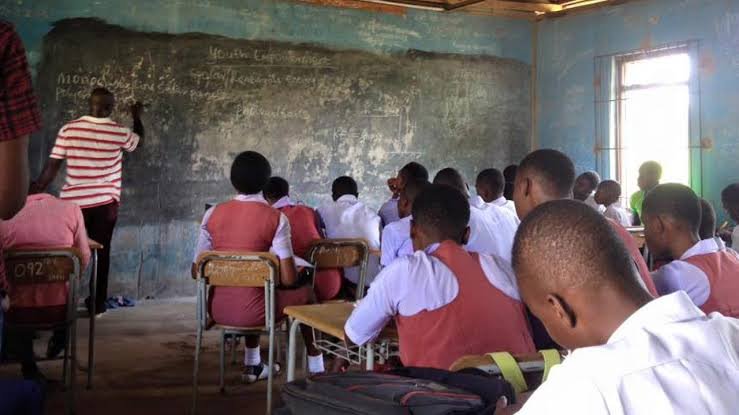
Can Civic Education replace Government in WAEC? This is a common question among secondary school students, especially those preparing for their WAEC examinations or choosing their subjects in SSS 1, SSS 2 and SSS 3.
The answer is: Civic Education and Government are two different subjects, so you should not automatically use one as a substitute for the other. Although they discuss related topics, they have different syllabuses and examination requirements.
For the 2026 and 2027 WASSCE examinations, WAEC lists both Civic Education and Government as separate subjects. Therefore, a student who chooses Civic Education should not assume that it will automatically satisfy a course requirement that specifically asks for Government.
Let’s look at the differences and what students should know before choosing either subject.
Can I Replace Civic Education with Government in WAEC?
No, not as an automatic replacement.
WAEC recognises Civic Education and Government as separate subjects. Both appear on its approved subject list for the 2026 WASSCE, and both are available for private candidates.
However, whether you can use Civic Education instead of Government for admission depends on the course and institution you intend to apply to.
For example, if a university’s admission requirements specifically request Government, do not assume that a Civic Education credit will be accepted in its place. Check the current JAMB brochure or IBASS eligibility checker before making your final subject combination.
My advice: If you are interested in studying a course that requires Government, register for Government rather than relying on Civic Education as a substitute.
What Is Civic Education?
Civic Education is a subject that teaches students about their rights, duties, responsibilities and participation in society.
It helps individuals understand how to become responsible citizens, respect the rights of others, obey the law and contribute positively to their communities.
Some important topics covered in Civic Education include:
- Human rights and responsibilities.
- National values and discipline.
- Democracy and democratic principles.
- Citizenship and national identity.
- Rule of law.
- Peace, tolerance and conflict resolution.
- Responsible leadership.
- Duties and obligations of citizens.
Importance of Civic Education
Civic Education is important because it helps students understand their role in society.
Some of its benefits include:
- It teaches citizens about their fundamental rights and responsibilities.
- It encourages respect for the law and the rights of other people.
- It promotes peaceful coexistence among people from different backgrounds.
- It encourages participation in democratic activities.
- It teaches honesty, discipline and responsible behaviour.
- It helps students understand national values and the importance of good leadership.
- It promotes patriotism and national unity.
Rights and Responsibilities of Nigerian Citizens
The rights of Nigerian citizens are protected under the Constitution of the Federal Republic of Nigeria, subject to the relevant constitutional provisions.
Some examples include:
Rights of citizens
- Right to life.
- Right to dignity of the human person.
- Right to personal liberty.
- Right to a fair hearing.
- Right to freedom of expression.
- Right to freedom of thought, conscience and religion.
- Right to peaceful assembly and association.
- Right to freedom of movement.
Responsibilities of citizens
- Obey the laws of Nigeria.
- Respect the rights of other people.
- Pay taxes as required by law.
- Protect public property.
- Contribute positively to the development of the community.
- Respect national symbols and institutions.
- Promote peace and national unity.
- Participate responsibly in civic and democratic activities.
What Is Government?
Government is the system or institution through which a country or community is administered.
It involves the people and institutions responsible for making laws, implementing policies, maintaining order and managing public affairs.
In Nigeria, the three arms of government are:
- The Legislature: Responsible for making laws.
- The Executive: Responsible for implementing laws and government policies.
- The Judiciary: Responsible for interpreting laws and administering justice.
Features of Government
Some major features of government include:
- Constitution: A constitution provides the fundamental rules and principles that guide the administration of a country.
- Legitimacy: Government needs lawful authority and public acceptance to exercise its powers.
- Political power: Government has the authority to make and enforce decisions within its jurisdiction.
- Revenue: Government raises funds through taxes and other lawful sources to provide public services.
- Public institutions: Government operates through institutions such as ministries, courts and public agencies.
- Territorial jurisdiction: Government exercises authority over the people and territory within its jurisdiction.
Functions of Government
The major functions of government include:
- Making and enforcing laws.
- Maintaining law and order.
- Protecting lives and property.
- Providing security and national defence.
- Administering justice.
- Promoting economic development.
- Providing public infrastructure and essential services.
- Protecting the rights of citizens.
- Maintaining diplomatic relations with other countries.
- Formulating and implementing public policies.
Difference Between Civic Education and Government
Although the two subjects discuss some related issues, they do not have exactly the same focus.
| Civic Education | Government |
|---|---|
| Focuses on citizenship and responsible behaviour. | Focuses on political systems and the administration of a state. |
| Teaches rights and responsibilities. | Studies political authority, institutions and power. |
| Covers national values, discipline and democracy. | Covers constitutions, political parties and electoral systems. |
| Encourages responsible participation in society. | Explains how political decisions are made and implemented. |
| Examines the duties of citizens. | Examines the structure and functions of government. |
Both subjects can help students understand how society works, but they approach the subject from different angles.
New WAEC Curriculum: What Students Should Know for 2026, 2027 and 2028
There is another development students should understand when choosing their subjects.
Following the Federal Government’s revised Senior Secondary School curriculum, a new subject called Citizenship and Heritage Studies was introduced by merging Nigerian History, Civic Education and Social Studies.
However, this does not mean that Government has automatically become the same subject as Civic Education.
According to WAEC’s published guidance:
- 2026 WASSCE: Civic Education and Government are listed as separate examination subjects.
- 2027 WASSCE: Civic Education and Government remain available as separate subjects.
- 2028 WASSCE: Citizenship and Heritage Studies is scheduled to become an examinable core subject after the development and implementation of its syllabus.
WAEC also states that candidates registering for the 2026 and 2027 examinations are to sit English Language and General Mathematics as their two core subjects, then select six or seven additional subjects to make a total of eight or nine.
Students should therefore pay attention to the examination year they are preparing for. Do not confuse the new curriculum with the subjects currently available for WAEC registration.
Should I Choose Both Civic Education and Government?
If you have enough room in your subject combination, you may choose both subjects. They cover different areas of knowledge and can complement each other.
However, you do not need to register for both simply because you are an Art or Commercial student.
Your subject combination should be based on your intended course of study and the admission requirements of the institutions you may apply to.
Before making your choice, check the JAMB IBASS eligibility checker and confirm the O’level requirements for your intended course.
You can also read our guide on WAEC subject combinations for different courses.
Conclusion: Can Civic Education Replace Government?
Civic Education cannot automatically replace Government because WAEC treats them as separate subjects with different syllabuses.
If your intended course specifically requires Government, do not assume that Civic Education will be accepted instead. Confirm the requirements before registering for your examination.
For more examination guidance, you can also read:
- WAEC and NECO Past Questions and Answers
- How to Pass WAEC Examination
- WAEC Subject Combination for All Courses
What is your own experience? Are you an SSS student trying to decide between Civic Education and Government? Tell us the course you intend to study and the examination year you are preparing for in the comment section. We can help you understand which subject combination to check.

35 Comments
I have D7 in Civic education can I study law ?
Did you have Government in your WAEC RESULT if yes then you can study Law
I have only math English commerce Yoruba and civic in waec which course can I study
With maths,english, economics, marketing and civic education can I go for business administration
Yes, you can go for Business Administration is a nice subject combination, although Commerce was not involved Economics cover it.
You don’t need government to study law. The 3 main subjects are 1. Literature in English 2 English Language and Mathematics . Plus any 2 subjects in arts or social science. crk , economics, civic education , government and marketing
Mr Kingsley, When you hear the word government and Law what come to your mind? Please Mr Kingsley that idea is a bad attempt of decision here, don’t try to lead the public astray thanks.
Pls I have civic education in my NECO result can I apply for mass comm or political science thank you.
Yes Mr Abdul
Please I have mathematics
English, economics, commerce Civic education, can I study business administration??
Pls I have Civic,econ,commerce, English,math,biol,crs, marketing,lit in English. And I want to study Mass communication.
Yes You can Study Mass Communication
I have English, maths, Economics and civic education please can I study
Economics?
Yes You can study Economics as a Course.
Please can I study business administration without mathematics
Yes, you can.
Please what course can I study with this waec result in university I have mathematics,English language, commerce, civic education, agricultural science
Can you please list all the Nine subjects in other for us to help you out?
the subjects in other
Mathematics C
English langauge C
Commerce B
Civic education B
Financial account F
Yoruba C
Animal husbandry F
Agricultural science C
Economics D
Please what course can i study with this result and which school
Please can I study public administration with maths, English, civic and economics
No… You need English Government, civic or marketing and Economics or commerce.
Please I have
Mathematic C6
English language C6
Civic Education C6
Literature in English C6
Agricultural science E8
Christian religious knowledge C6
Salesmanship C6
Economic C6
Government D7
Can I study mass communication? If no which other course can I study?
You can study political science, Law, theatre Art, linguistics e.t.c
Hello, please I have
English. C4
Maths. A1
Economics. C4
Civic edu. B3
Lit in English. E8
Biology. C6
Government. D7
Islamic studies. D7
Arabic. A1
Please can I study “Education and Economics”.?
Thanks.
Please guide me. I have:
English C
Mathematics C
Marketing C
CRS C
Government A
Civic Education C
Biology C
What are the courses that I can study with the above course?
Your course subjects are not complete, it supposes to be 9 subjects how come Is 7? but you can study Sociology, Political Science, Economics e.t.c
I mean to say “…with the above subjects?”
I didn’t get Economics and Literature-in-English. Thank you…
What is your list of courses and the credit unit?
Marketing C6
CRS C5
Economics D7
Government A1
Literature in English F9
Civic Education C4
English Language C5
General Mathematics C6
Biology C5
Pls l have
English
Literature in English
Crs
Civic
Mathematics
Biology
Dyeing and bleaching
Agriculture
Igbo language
Can I study mass communication if l replace Civic with government in my jamb
Pls help me
Can I Study ECONOMICS with
Civic and government in SSCE subject Combination
Pls… Can i study early childgood education with MATH E8 ENG C4 LIT IN ENG B2 GOVT D7 CIVIC C5 FRENCH B3 CRS C5 MARKTG C5 YOR C5 at UI
MARKETING. B3
CRS B3
ECONOMICS C4
GOVERNMENT E8
LITERATURE IN ENGLISH D7
CIVIC EDUCATION A1
ENGLISH LANGUAGE C6
MATHEMATICS B3
Please I’m trying to study economics and finance in Italy as an international would my result be accepted?
English c
Maths c
Government d
Literature b
Crs b
agric c
Economic**
Civic c
Commerce c
Can i study linguistic or mass communication