


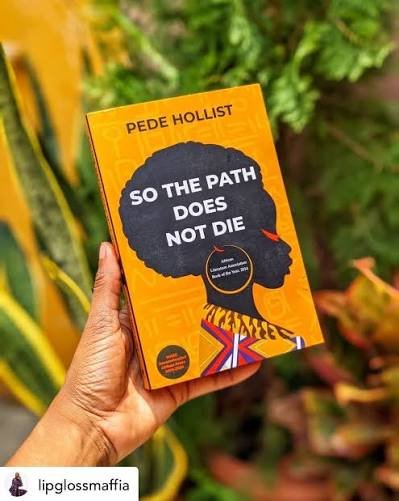
So the Path Does Not Die Summary – For examination revision, candidates should pay particular attention to Fina’s interrupted initiation, her relationship with Baramusu, her experiences at Crowther College, her life in America and her eventual return to Sierra Leone.
About the Author – Pede Hollist
Pede Hollist is a Sierra Leonean-born writer and academic. He is a Professor of English at the University of Tampa in the United States. His writing explores African identity, migration, cultural differences and the experiences of Africans living outside their countries.
His novel, So the Path Does Not Die, was published in 2012. His short story, “Foreign Aid,” was shortlisted for the 2013 Caine Prize for African Writing. The novel itself should not be confused with that shortlisted short story.
Brief Summary of So the Path Does Not Die
So the Path Does Not Die follows the life of Finaba Marah, popularly called Fina, from her childhood in Sierra Leone to her adult life in the United States and eventual return to Sierra Leone.
Fina’s troubles begin when her father interrupts her traditional initiation ceremony, which includes female circumcision. Her grandmother, Baramusu, strongly supports the practice, while her parents oppose it because their first daughter, Dimusu, died following a similar initiation.
The interruption makes Fina feel that she has been separated from an important part of her community. Her family leaves Talaba village for Freetown, where she grows up and receives an education. After her father’s death, she is taken into the home of Pa Heddle, but she continues to struggle with acceptance and belonging.
Fina later moves to the United States, where she works, studies and supports her family in Sierra Leone. She falls in love with Cammy, a Trinidadian doctor, but their relationship faces difficulties involving cultural differences, family responsibilities and secrets from their past.
After several disappointments, Fina returns to Sierra Leone. She searches for her grandmother and finds a new sense of purpose through caring for vulnerable children, including Mawaf, a girl affected by the civil war.
The novel examines the meaning of home, cultural identity, family responsibility, migration and the struggle to belong.
Prologue: The Story of Musudugu
The prologue introduces Musudugu, a village governed by women and protected by strict traditional rules. Men are not allowed to remain in the village after nightfall, and male children must leave when they are old enough.
The village’s established way of life is challenged when a girl named Kumba Kargbo begins questioning its rules. Her search for knowledge and understanding eventually leads to the destruction of Musudugu.
The story introduces an important question that runs through the novel: should people preserve inherited traditions without questioning them, or should traditions change when circumstances demand it?
Chapter-by-Chapter Of So the Path Does Not Die Summary
Chapter 1
Baramusu visits her son Amadu and his wife, Nabou. She wants their daughter, Finaba, to undergo the traditional initiation ceremony. Nabou refuses because their first daughter, Dimusu, died after undergoing a similar ceremony.
Fina overhears the disagreement and feels excluded from the other girls in her age group. Baramusu tells her the story of Musudugu and explains why she believes Fina has an important role in preserving their people’s traditions. Later, Baramusu secretly takes Fina to the initiation place.
Chapter 2
Amadu discovers what is happening and interrupts the initiation. He takes Fina away and brings her home, angering the women who consider his action a violation of their customs.
The family remembers Dimusu’s death and the painful experience that made Amadu and Nabou oppose the practice. After further conflict in the village, Amadu decides that his family must leave Talaba for Freetown.
Chapter 3
Amadu and his family settle in Freetown. Through his uncle, Alhaji Umaru, Amadu gets work and begins providing for his family. Nabou also engages in small trading to support Fina’s education.
Amadu later dies from tetanus. Pa Heddle, his employer, offers to support Fina’s education and takes her into his household. Fina becomes a foster child in the Heddle family, where she struggles to feel accepted.
Chapter 4
Fina attends Crowther College and initially enjoys the freedom of living away from the Heddle household. However, she experiences discrimination because she belongs to the Fula ethnic group.
She also witnesses difficulties in her roommate Memuna’s relationship with Simeon. Her academic challenges increase when she struggles with Organic Chemistry. She seeks help from Kizzy, a laboratory assistant, but he takes advantage of her trust and sexually assaults her. The experience disrupts her education and confidence.
Chapter 5
Fina begins working at a health clinic in Koidu, where she meets Meredith Frank, an American woman who manages the clinic. Their friendship helps Fina develop greater confidence.
Fina also attracts the attention of Sidibe Kaykay, a diamond dealer. He attempts to win her affection, but she remains cautious. Meredith later marries Chip Munroe and leaves for the United States. Sidibe eventually helps Fina obtain a Sierra Leonean passport and some money, giving her another opportunity to pursue her plans.
Chapter 6
Fina travels to the United States, where Meredith and Chip welcome her. She enrols in a business management programme and takes up work to support herself.
She struggles to balance her education and employment. After losing one job, she obtains customer-service work with assistance from Sangallay. She also reconnects with Edna, who tells her about her life in America and her marriage to Kizzy.
Chapter 7
Fina develops a friendship with Aman, a woman who takes pride in her African heritage. After Fina’s mother dies, Aman supports her emotionally and financially.
Fina later marries Jemal, but the marriage becomes abusive. She eventually leaves him and files for divorce. Meanwhile, Aman meets Bayo, a Nigerian doctoral student, and begins a relationship with him.
Chapter 8
Fina attends a social gathering organised by a friend of Bayo. There, she meets Cammy, a Trinidadian medical doctor.
They become interested in each other through their conversations, shared interests and cultural experiences. Their friendship develops into a romantic relationship.
Chapter 9
Fina and Cammy’s relationship becomes more serious. However, they disagree over female genital mutilation (FGM) after discussing the practice.
Fina explains her personal experience and eventually tells Cammy that her initiation was interrupted when she was a child. Although Cammy remains committed to her, the disagreement exposes differences in their understanding of culture and women’s experiences. He later proposes marriage.
Chapter 10
Fina continues supporting her family in Sierra Leone by sending money and supplies. After her mother’s death, her younger sister Isa becomes increasingly dependent on her.
The civil war worsens the family’s situation, forcing Fina to help Isa and her children escape to Guinea. Her financial responsibilities put pressure on her relationship with Cammy. As their wedding approaches, Fina discovers that she is pregnant.
Chapter 11
As Fina prepares for her wedding, she has a disturbing dream about the night her initiation was interrupted. The memory brings back feelings of incompleteness and her longing for home.
Cammy tries to encourage her to concentrate on their future together. However, Fina remains worried about Isa and the responsibilities she carries towards her family.
Chapter 12
Fina and Cammy’s wedding brings together guests from different cultural backgrounds. Discussions about African identity, life in America and cultural differences take place among the guests.
The celebration becomes tense when Lincoln Scraps attempts to enter and makes insulting remarks about Fina. A disagreement develops among the guests, but Cammy tries to prevent the situation from ruining the occasion.
Chapter 13
Fina prepares to marry Cammy in church, but she feels the absence of her parents and family members. Her sister Isa is unable to attend because her visa application is unsuccessful.
The ceremony is interrupted when Jemal appears and claims that Fina is still his wife. The unexpected appearance creates confusion and prevents the wedding from proceeding normally.
Chapter 14
Fina and Cammy discuss Jemal’s appearance. Fina explains that she has divorce papers showing that her previous marriage has ended.
However, Cammy is upset that she did not tell him about the marriage earlier. His mother, Celeste Priddy, tries to calm the situation, but the couple’s disagreement continues.
Chapter 15
Edna and Aman try to comfort Fina after the wedding crisis. Fina reflects on her difficult experiences, including discrimination, her childhood, the interrupted initiation and the assault she suffered at college.
Cammy, meanwhile, feels embarrassed and hurt by what happened. Fina eventually decides to return to Sierra Leone despite Aman’s attempt to change her mind.
Chapters 16–17
Cammy faces another unexpected family revelation when a young man named Glen Gibson appears and claims to be his son.
Meanwhile, Fina continues planning her return to Sierra Leone. Edna asks her to help Kizzy by speaking to Cammy about the incident at the wedding. Fina struggles with the request because of the painful experience she had with Kizzy in college, but she also considers the consequences of allowing him to be punished unfairly.
Chapter 18
Cammy’s past relationship with Anushka Mutari becomes important after Glen claims to be his son. Glen explains that he needs help because of a kidney problem.
Cammy visits Fina and apologises for their disagreement. However, Fina remains determined to return home. Their conversation brings back memories of their difficult pasts and helps them understand each other’s experiences.
Chapter 19
Fina tells Cammy about her previous marriage to Jemal and explains why it ended. Cammy also reveals more about his past and his son, Glen.
He considers donating a kidney to help Glen. Fina supports his decision, and their conversation brings greater honesty and understanding into their relationship. Fina also asks Cammy to help Kizzy by giving an account of the wedding incident.
Chapter 20
Aman is disappointed by Bayo’s absence and begins questioning their relationship. Bayo later returns and explains that he wants to marry her and return to Nigeria.
At the same time, Fina is admitted to hospital after experiencing pregnancy complications. Cammy, Aman, Bayo and Edna gather around her. Cammy also confirms that he is willing to help Kizzy’s case.
Chapter 21
At a gathering in Edna’s new home, Fina discusses her intention to return to Sierra Leone and help young girls become independent.
The guests debate whether Africans living abroad should return to their countries and contribute to their development. The discussion also exposes disagreements about identity and belonging. Later, tension develops between Cammy and Kizzy when Kizzy reveals his past involvement with Fina.
Chapter 22
Fina explains to Cammy what happened between her and Kizzy at college. Cammy also reveals a troubling incident from his past involving a road accident and Lincoln Scraps.
The truth about the accident eventually emerges, showing that Scraps had concealed his own responsibility. Meanwhile, Fina has already returned to Sierra Leone, leaving Cammy to discover that she is no longer in America.
Chapter 23
Fina returns to Sierra Leone and is shocked by the changes caused by the civil war. She begins searching for her grandmother, Baramusu, with assistance from a recovery agency.
She gives birth to a daughter and starts rebuilding her life. During her search, she meets Mama Yegbe, a blind elderly woman, and Mawaf, a young girl who lives with her. Fina learns about their experiences during the war and begins developing a close relationship with them.
Chapter 24
Fina continues searching for Baramusu but eventually accepts that she may never find her grandmother. She develops a new family relationship with Mama Yegbe, Mawaf and the children at the centre.
She decides to adopt Mawaf and takes a job at the orphanage. She also reconnects with Sidibe Kaykay and attends Aman’s wedding to Bayo in Lagos. At the wedding, she meets Cammy again. They discuss their future and the differences they must overcome.
Epilogue
The epilogue reveals that Cammy eventually returns to Sierra Leone to live with Fina. He decides to support her chosen path rather than insist that she abandon her connection to home.
Setting of So the Path Does Not Die
The novel takes place mainly in Sierra Leone and the United States.
| Setting | Importance |
|---|---|
| Talaba village | Fina’s birthplace and the centre of the traditional conflict surrounding her initiation. |
| Freetown | The city where Fina grows up, attends school and later returns to rebuild her life. |
| Koidu | The place where Fina works at a health clinic before moving to America. |
| United States | The setting for Fina’s adult life, education, work, relationship with Cammy and struggle with immigrant identity. |
| Lagos, Nigeria | The location of Aman’s wedding to Bayo, where Fina meets Cammy again. |
Major Characters in the Novel
1. Finaba Marah (Fina)
Fina is the protagonist of the novel. She is intelligent, determined and committed to supporting her family. Her interrupted initiation affects her sense of identity and belonging throughout her life.
Her experiences in Sierra Leone and America expose her to discrimination, difficult relationships and personal challenges. Eventually, she returns home and finds purpose in helping vulnerable children.
2. Baramusu
Baramusu is Fina’s grandmother. She strongly believes in preserving traditional customs and wants Fina to undergo the initiation ceremony. Her insistence creates conflict with Fina’s parents.
She represents the older generation’s attachment to inherited traditions.
3. Nabou
Nabou is Fina’s mother. She opposes her daughter’s initiation because of the death of her first daughter, Dimusu, following a similar ceremony. She values her daughter’s education and future.
4. Amadu
Amadu is Fina’s father. He interrupts the initiation ceremony and takes his daughter away from the initiation place. His decision causes conflict with the village community and eventually leads the family to leave Talaba.
5. Pa Heddle
Pa Heddle is Amadu’s employer. After Amadu’s death, he takes responsibility for Fina’s education and upbringing. Fina lives with his family but struggles to feel fully accepted.
6. Cammy
Cammy is a Trinidadian doctor and Fina’s romantic partner. Their relationship is affected by cultural differences, family responsibilities and personal secrets. He eventually decides to support Fina’s life in Sierra Leone.
7. Aman
Aman is Fina’s African-American friend. She is proud of her African heritage and supports Fina through several difficult experiences. She later develops a relationship with Bayo.
8. Bayo
Bayo is a Nigerian doctoral student and Aman’s partner. His views about returning to Africa and contributing to one’s homeland become part of the novel’s discussion about migration and belonging.
9. Edna
Edna is Fina’s foster sister. They grow up in the same household and maintain an important connection despite their disagreements and separate experiences.
10. Kizzy
Kizzy is a laboratory assistant at Crowther College who takes advantage of Fina when she seeks academic help. His actions have lasting effects on Fina and later become a source of conflict.
11. Mawaf
Mawaf is a young girl affected by the Sierra Leonean civil war. Fina develops a close relationship with her and eventually plans to adopt her.
12. Mama Yegbe
Mama Yegbe is a blind elderly woman whom Fina meets after returning to Sierra Leone. She becomes part of Fina’s new family and helps her reconnect with a sense of community.
13. Isa
Isa is Fina’s younger sister. Fina provides financial support for her and her children, even when the responsibility becomes difficult.
14. Jemal
Jemal is Fina’s former husband. Their abusive marriage ends in divorce, but his unexpected appearance at Fina’s wedding to Cammy creates a serious problem.
Major Themes in So the Path Does Not Die Summary
1. Identity and Belonging
Fina spends much of her life trying to understand where she belongs. Her interrupted initiation makes her feel separated from her community, while her experiences in America expose her to the difficulties of being an immigrant.
Her return to Sierra Leone helps her develop a new understanding of home and belonging.
2. Tradition and Modernity
The conflict between Baramusu and Fina’s parents introduces the struggle between traditional practices and changing social values.
Baramusu believes that the initiation ceremony must continue to preserve the people’s customs. Amadu and Nabou oppose it because of the danger it presents to their daughter.
The novel encourages readers to examine traditions rather than accept every inherited practice without question.
3. Migration and the Immigrant Experience
Fina moves from Sierra Leone to the United States in search of education, employment and a better life. However, living abroad does not remove all her problems.
She continues to experience cultural differences, family responsibilities and the feeling of being separated from home.
4. Family Responsibility and Sacrifice
Fina regularly sends money and other assistance to her family in Sierra Leone. Even when her responsibilities affect her relationship with Cammy, she finds it difficult to abandon her sister Isa.
Her actions show how family obligations can influence personal decisions.
5. Gender and Women’s Rights
The novel examines the expectations placed on women through traditional practices, relationships and social attitudes.
Fina’s experience with the interrupted initiation, discrimination and abuse shows the challenges women face when their choices and independence are restricted.
6. Discrimination and Ethnic Identity
Fina experiences discrimination because of her Fula background, particularly at Crowther College. Her experience shows how ethnic identity can affect a person’s acceptance and opportunities.
7. War, Trauma and Survival
The Sierra Leonean civil war affects Fina’s family and many other people. Mawaf’s experience shows the lasting effects of conflict on children and vulnerable members of society.
Fina’s decision to care for children affected by the war also presents the possibility of rebuilding lives after suffering.
Literary Devices and Techniques
| Literary term | Meaning and example |
|---|---|
| Allegory | A story that represents wider ideas. The prologue’s story of Musudugu represents the struggle between inherited customs and the desire for change. |
| Symbolism | The use of something to represent a deeper meaning. The path represents cultural inheritance, identity and the direction a person chooses in life. |
| Metaphor | A direct comparison without using “like” or “as.” The recurring idea of a path represents the choices and responsibilities that shape Fina’s life. |
| Flashback | A return to an earlier event in a story. Fina’s memories of her interrupted initiation influence her decisions as an adult. |
| Conflict | A struggle between opposing ideas or characters. The disagreement between Baramusu and Fina’s parents represents the conflict between tradition and personal choice. |
| Characterisation | The way a writer presents a character’s personality. Hollist presents Fina as determined through her efforts to study, work and support her family. |
| Irony | A contrast between expectation and reality. Fina travels to America hoping for a better life, but she continues to face difficulties and feelings of exclusion. |
| Setting | The time and place of a literary work. The movement between Sierra Leone and America helps develop the themes of migration and belonging. |
| Point of view | The position from which a story is narrated. The novel uses a third-person narrator who presents the experiences of its characters. |
| Foreshadowing | Hints about events that may happen later. The prologue’s warning about the consequences of challenging established customs prepares readers for the conflicts in Fina’s story. |
Likely WAEC and NECO Literature Questions and Answers on So the Path Does Not Die Summary
1. Who is the protagonist of So the Path Does Not Die?
Finaba Marah, popularly known as Fina, is the protagonist.
2. Who is Baramusu?
Baramusu is Fina’s grandmother, who strongly supports the traditional initiation ceremony.
3. Why does Amadu interrupt Fina’s initiation?
He opposes the ceremony because his first daughter, Dimusu, died after undergoing a similar initiation.
4. Why does Fina’s family leave Talaba village?
The family leaves after Amadu interrupts the initiation ceremony, an action that creates serious conflict with the community.
5. Who takes responsibility for Fina’s education after her father’s death?
Pa Heddle takes responsibility for supporting Fina’s education and upbringing.
6. Why does Fina struggle at Crowther College?
She experiences ethnic discrimination and academic difficulties, particularly with Organic Chemistry.
7. Who is Cammy?
Cammy is a Trinidadian doctor who becomes Fina’s romantic partner.
8. What causes disagreement between Fina and Cammy?
Their different views about female genital mutilation, family responsibilities and cultural expectations contribute to their disagreements.
9. Who is Aman?
Aman is Fina’s African-American friend who takes pride in her African heritage.
10. What happens to Fina’s marriage to Jemal?
The marriage becomes abusive, and Fina eventually leaves and obtains a divorce.
11. Why does Fina return to Sierra Leone?
She wants to reconnect with her roots, search for her grandmother and build a meaningful life in her home country.
12. Who is Mawaf?
Mawaf is a young girl affected by the civil war whom Fina eventually plans to adopt.
13. What does the path symbolise in the novel?
The path symbolises cultural inheritance, identity, belonging and the choices people make in life.
14. Explain the conflict between tradition and modernity in the novel.
The conflict is shown through Baramusu’s insistence on Fina’s initiation and her parents’ opposition to the practice. It raises questions about preserving cultural identity while rejecting harmful traditions.
15. Why is the novel titled So the Path Does Not Die?
The title refers to the importance of maintaining a connection with one’s cultural roots and community. However, the novel also shows that preserving a culture does not mean refusing to change harmful practices.
Conclusion about So the Path Does Not Die Summary
So the Path Does Not Die is a coming-of-age novel about identity, family, migration and belonging. Through Fina’s experiences in Sierra Leone and America, Pede Hollist examines the difficulties of balancing cultural inheritance with personal freedom.
For examination revision, candidates should pay particular attention to Fina’s interrupted initiation, her relationship with Baramusu, her experiences at Crowther College, her life in America and her eventual return to Sierra Leone.
