


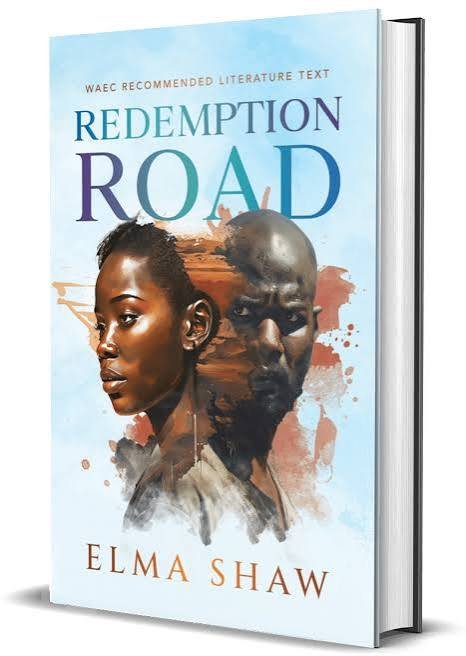
Redemption Road is a 2008 Liberian novel by Elma Shaw. It follows Bendu Lewis, a young woman who counsels survivors of Liberia’s civil war while hiding her own painful wartime experiences. When the former rebel commander who held her captive reappears in Monrovia, Bendu decides to seek justice. Her decision forces her to confront her past and reveal secrets she has kept for years.
The novel explores the effects of war, justice, forgiveness, trauma, reconciliation and the difficult process of rebuilding lives after conflict.
Redemption Road at a Glance
| Detail | Information |
|---|---|
| Title | Redemption Road: The Quest for Peace and Justice in Liberia |
| Author | Elma Shaw |
| Year published | 2008 |
| Publisher | Cotton Tree Press |
| Genre | Prose fiction (novel) |
| Setting | Monrovia, Liberia, during the government of Charles Taylor |
| Foreword | Ellen Johnson Sirleaf, former President of Liberia |
| Main character | Bendu Marie Lewis |
| Exam use | WAEC Literature-in-English prose text, 2026–2030 |
About the Author, Elma Shaw
Elma Shaw is a Liberian writer. She studied Communication Media and Film and Video at American University in the United States. Redemption Road is her first novel.
Shaw’s writing explores the effects of Liberia’s civil conflict, particularly the experiences of women and other survivors. Her novel examines the challenges of rebuilding lives after war and the importance of truth, justice and reconciliation.
The book later inspired a documentary titled The Road to Redemption, which focuses on women survivors of the Liberian civil war and the emotional difficulties they face after the conflict.
Background to the Novel
To understand Redemption Road, it is useful to know some important events in Liberian history.
- Liberia was founded by freed American slaves, and its history includes political and social divisions.
- The Liberian Civil War began in 1989, and fighting continued until 2003.
- The conflict caused widespread deaths, displacement and suffering. Women and children were among those severely affected.
- The 1980 military coup also forms part of the novel’s background because Bendu’s brother, Benji, died during that period.
- The story takes place during Charles Taylor’s administration, when Liberia was still struggling with corruption, insecurity and the consequences of war.
Shaw uses this historical background to show that the end of a war does not automatically end the suffering it causes. Survivors and former combatants may continue living in the same communities, while the country struggles to establish justice and rebuild trust.
Plot Summary of Redemption Road
The story centres on Bendu Lewis, a Liberian woman who works as co-director of Peace in Practice (PIP), an organisation that provides peace education, counselling and vocational training for people affected by the civil war.
Although Bendu helps other survivors deal with their experiences, she has kept her own wartime suffering secret from her family and friends. Her silence is connected to what happened to her at Duluma camp, where she was held by rebel fighters led by Commander Cobra.
The novel opens with Bendu’s family holding a memorial for her grandmother, Catherine May Tyler Lewis, popularly known as Granny May. Her remains were never recovered after her death during the war, so the family uses a symbolic casket for the ceremony. Bendu was with her grandmother when she died, but she has never revealed everything that happened afterwards.
Bendu’s life changes when she sees Commander Cobra in Monrovia. The former rebel commander now uses the name Moses Varney. He is involved in illegal activities and has connections with powerful people, including individuals within the justice system.
Seeing Varney brings back painful memories. Bendu decides that she will no longer remain silent about what he did during the war. She reports him to the police and seeks legal action, even though Agnes Jallah, her colleague and friend, warns her that the case may be difficult.
Varney uses his money and influence to protect himself. He has connections within the police and judiciary, making it difficult for Bendu to obtain justice. He eventually learns about her complaint and threatens her, demanding that she withdraw the case.
The conflict becomes more dangerous when Varney kidnaps Bendu and takes her to a lonely beach. He threatens to expose her wartime secrets if she continues pursuing him. Bendu refuses to withdraw her complaint and manages to escape.
After reaching Calvin’s house, Bendu receives medical attention. She finally tells her family and friends the truth about her experiences at Duluma camp. She reveals that she was forced to marry a rebel soldier named Samson and became part of the Women’s Auxiliary, a combat training unit. She also reveals that she gave birth to a daughter whom she had to leave behind when the child was still very young.
Bendu’s family does not reject her after hearing the truth. Her sister Siatta supports her, while her mother, Eva Lewis, travels from the United States to be with her. Bendu’s decision to speak openly about her past becomes an important step in her recovery.
She later contacts the Red Cross in search of the daughter she abandoned during the war. Since she does not know the child’s real name, she refers to her as “Baby Girl”. With assistance from the International Committee of the Red Cross, Bendu is eventually reunited with her daughter.
Meanwhile, Bendu continues to pursue legal action against Varney. After her escape, she files assault charges against him. Varney’s employer, known as Chief, has him confined to a house in Paynesville. Varney is later found dead in the St. John River, apparently shot.
His death creates further problems for Bendu. She wants to understand what happened, but Siatta’s husband, Terrance Clarke, secretly arranges for her to be arrested in connection with the matter. Calvin helps her obtain legal representation.
Following Varney’s death, Bendu begins to question whether forgiveness might have brought her more peace than punishment. Other characters also experience changes in their lives. Calvin develops a different understanding of justice after reporting on the Sierra Leone war crimes tribunal. Tenneh becomes a peer counsellor, while Siatta begins to reconsider her marriage to Terrance.
The novel ends by showing that redemption is not a single event. It is a difficult journey involving truth, courage, healing and the willingness to face the past.
Chapter-by-Chapter Summary of Redemption Road
The novel is divided into three parts:
- Part One: Time Heals Nothing — Chapters 1–18.
- Part Two: Truth Lights the Way — Chapters 19–26.
- Part Three: Peace is a Reward — Chapters 27–34.
The summaries below follow the available published chapter notes. Some chapters do not have sufficiently detailed accounts in the accessible sources and are marked accordingly rather than filled with guessed events.
Part One: Time Heals Nothing
Chapter 1: Granny May’s Memorial
The novel opens with a memorial service for Bendu Lewis’s grandmother, Catherine May Tyler Lewis, popularly known as Granny May. Since her remains were never recovered after her death during the civil war, the family holds a symbolic funeral.
The occasion brings back painful memories for Bendu. She remembers fleeing with her sick grandmother during the war and refusing to abandon her. After Granny May dies, Bendu is captured by rebel fighters led by Commander Cobra. She has never told her family the full story of what happened to her afterwards.
Chapter 2: Moses Varney
The narrative shifts to Moses Varney, formerly known as Commander Cobra. He arrives at the Temple of Justice in Monrovia with his driver and bodyguard, Weah.
He encounters some displaced boys near the courthouse and remembers his own difficult childhood. His thoughts turn to Liberia’s justice system and the country’s political problems. Although he speaks about justice and the need for change, his own activities raise questions about his intentions.
Chapter 3
A sufficiently detailed, independently checkable account of this chapter was not available in the free sources consulted. Its events need confirmation before publication.
Chapter 4: The Counselling Group
Bendu and Agnes conduct a counselling session with Rosetta, Josephine and Tenneh, three women affected by the war.
The women share their different experiences of loss and suffering. They are encouraged to write letters to people who hurt them. Tenneh reads a letter addressed to her mother, explaining how she felt betrayed and rejected during the war.
The session raises the subject of forgiveness. Tenneh’s story also reminds Bendu of her own painful experiences. Later, Bendu unexpectedly sees Commander Cobra at a filling station. The encounter frightens her and brings back memories she has tried to suppress.
Chapter 5
A sufficiently detailed, independently checkable account of this chapter was not available in the free sources consulted. Its summary needs confirmation before publication.
Chapter 6: Bendu’s Decision to Seek Justice
Bendu decides to pursue Commander Cobra for his wartime crimes. Agnes warns her that bringing a powerful former commander to justice may be difficult.
Calvin and Siatta become involved after learning about Bendu’s encounter with Cobra. They disagree about how to handle the situation. While Calvin doubts the effectiveness of the police, Bendu insists that she wants to follow the legal process.
Chapter 7: Moses Varney and Judge Dagoseh
The narrative returns to Moses Varney, who visits Judge Dagoseh at the judiciary chambers.
Varney regards the judge as corrupt but useful to his plans. Their meeting exposes the influence of bribery and political interests within Liberia’s justice system. The chapter also reveals their different ideas about the political changes they hope to achieve.
Chapter 8: The Search for Commander Cobra
Calvin begins searching for Commander Cobra in different places around Monrovia. Meanwhile, Bendu continues to experience nightmares connected to her time at Duluma camp.
Bendu, Siatta and Calvin also discuss Liberia’s history and the ethnic divisions that contributed to the country’s suffering. Their conversation reveals Calvin’s bitterness over the events of the 1980 coup, while Siatta argues that people should not be punished for the actions of their ancestors.
Chapter 11: Bendu Discusses Her Encounter with Cobra
Bendu informs Calvin and Siatta about her encounter with Commander Cobra and tells them where he is staying. Calvin wants to handle the matter personally, while Siatta suggests involving the authorities.
Bendu disagrees with Calvin and remains determined to report Cobra to the police. She contacts Agnes to accompany her to the station.
Chapter 12: Reporting Commander Cobra
Bendu and Agnes visit the police station to report Cobra. Lieutenant Tarpeh asks Bendu to provide evidence and specific information about the crimes she is reporting.
Although she struggles to provide all the details required, Bendu refuses to abandon her complaint. The chapter highlights the difficulty victims face when trying to obtain legal justice for crimes committed during war.
Chapter 13: Varney’s Criminal Activities
Moses Varney learns that Bendu may be taking legal action against him. He becomes concerned about the consequences and makes arrangements connected to his illegal business activities.
He also meets a contact named Diallo to discuss an exchange involving diamonds and arms. Their meeting does not proceed smoothly, and Varney becomes increasingly concerned about his security.
Part Two: Truth Lights the Way
Chapter 16: Bendu Confronts Varney
Varney takes Bendu to a beach and demands that she withdraw her complaint against him. He also threatens to expose secrets about her wartime experiences.
Bendu refuses to give up her pursuit of justice. She uses her survival skills to escape from Varney and makes her way to safety.
Chapter 17: Bendu Receives Medical Attention
Bendu reaches Calvin’s home, where he discovers that she has been injured. He wants to pursue Varney, but Bendu does not want further violence. He takes her to the hospital for treatment.
Siatta and Terrance arrive and insist that Bendu should stay with them for her safety. During the discussions at the hospital, Bendu’s family learns that Varney has threatened to reveal something about her past.
Chapter 18
A complete, independently checkable summary was not available in the free chapter notes consulted. Its specific events should be confirmed before publication.
Chapter 19: Bendu’s Legal Representation
Bendu receives legal assistance through the Thomas and Reeves law firm. Counselor Marlon Gray is assigned to handle her case.
During their discussion, Bendu expresses frustration about corruption and the failure of institutions to protect ordinary Liberians. She insists that Varney should answer for his wartime actions, while the lawyer explains the difficulties involved in prosecuting such crimes.
Chapter 20: Bendu’s Dream of Duluma
While staying at Siatta’s home, Bendu falls asleep and dreams about an earlier attempt to escape from Duluma camp.
The dream recalls her difficult journey away from the camp and her hope of reaching safety. However, she is recognised by villagers who mistake her for someone connected to the rebels. An elderly man eventually intervenes, but Bendu is taken back towards Duluma.
The chapter uses a dream to reveal how strongly her wartime experiences continue to affect her.
Chapter 21: Varney’s Troubled Past
The narrative focuses on Moses Varney as he prepares for an operation involving his criminal associates. Although he presents himself as a powerful man, memories of his wartime actions trouble him.
He reflects on his past and the consequences of what he did. His private thoughts reveal guilt, even though he continues to pursue his interests.
Chapter 22: A Different Dream
Bendu experiences another dream connected to her time at Duluma. Unlike her previous nightmares, this one moves towards a feeling of freedom and relief.
After waking, she reflects on her recovery and the danger still posed by Varney. She learns that he has escaped before the police could apprehend him. She also begins thinking more seriously about finding the daughter she left behind during the war.
Part Three: Peace is a Reward
Chapter 27: News of Varney’s Death
Bendu discovers a newspaper report announcing the death of Moses Varney. His body has been found in the St. John River.
Rather than accepting the matter without question, Bendu becomes suspicious about the circumstances surrounding his death. She wants to understand what happened, but the situation soon takes another turn when the police arrive to question her.
Chapter 28: Bendu at the Police Headquarters
Bendu is taken to the National Police Headquarters in connection with Varney’s death. Calvin and Siatta support her, while her lawyers challenge the grounds for her arrest.
During questioning, Bendu maintains that she is innocent. The chapter exposes the continuing problems within Liberia’s police and justice systems.
Chapter 29: Bendu’s Release
Following the questioning, Bendu is released. The events surrounding Varney’s death continue to create tension between Bendu, Siatta and Terrance.
Siatta also begins to question her husband’s behaviour and whether he has been honest about what he knows.
Chapter 30: Bendu Returns Home
Bendu returns to her house and thinks about the daughter she left behind during the war. She imagines what life might be like if they were reunited and worries about whether her daughter would accept her.
She also reflects on Varney’s death and begins to question whether she might have found greater peace through forgiveness. Meanwhile, the work of Peace in Practice receives positive attention following a publication about Tenneh’s experience.
Major Events in the Novel
The following events are important for understanding the development of the story:
- Bendu’s family holds a memorial for Granny May.
- Bendu remembers her experiences during the civil war.
- Bendu unexpectedly sees Commander Cobra, who now uses the name Moses Varney.
- Bendu decides to report Varney and seek justice.
- Bendu and Agnes visit the police station.
- Varney threatens Bendu and attempts to stop her legal action.
- Bendu escapes after being taken to a beach.
- Bendu reveals the truth about her wartime experiences.
- Bendu searches for the daughter she left behind during the war.
- Bendu is reunited with her daughter through the help of the Red Cross.
- Varney is found dead in the St. John River.
- Bendu is questioned by the police in connection with Varney’s death.
- Calvin, Tenneh and Siatta experience important changes in their lives.
- Bendu begins to consider the relationship between justice, forgiveness and personal peace.
Setting of the Novel
The novel is set mainly in Monrovia, Liberia, during the government of Charles Taylor. Its events take place in a society still struggling with the effects of the civil war.
| Setting | Significance |
|---|---|
| Monrovia, Liberia | The main setting, where Bendu works, encounters Varney and pursues justice. |
| Duluma Camp | A place associated with Bendu’s wartime captivity and painful memories. |
| Temple of Justice | A location connected with the judiciary and the struggle for legal justice. |
| Peace in Practice | The organisation where Bendu and Agnes counsel and support war survivors. |
| Red Cross office, Bushrod Island | Associated with Bendu’s search for her lost daughter. |
| Paynesville | The location of the house where Varney is confined. |
| St. John River | The place where Varney’s body is discovered. |
The setting is important because it connects Bendu’s personal struggle with Liberia’s wider effort to recover from war. The movement between present-day Monrovia and memories of the conflict helps explain the characters’ actions and emotional struggles.
Characters in Redemption Road by Elma Shaw
| Character | Role in the novel |
|---|---|
| Bendu Marie Lewis | The protagonist. Co-director of Peace in Practice and a war survivor with a hidden past. |
| Commander Cobra / Moses Varney | The main antagonist. A former rebel commander who becomes involved in illegal activities after the war. |
| Siatta | Bendu’s older sister, who supports her during her difficult experiences. |
| Terrance Clarke | Siatta’s husband and a government official. He is dishonest and unfaithful. |
| Calvin J. Daniels | A freelance journalist who grew up with Bendu and was Benji’s friend. |
| Agnes Jallah | Bendu’s close friend and co-director of Peace in Practice. |
| Eva Lewis | Bendu’s mother, who lost her son Benji in the 1980 coup. |
| Tenneh | A survivor Bendu counsels. She later becomes a peer counsellor. |
| Rosetta | A woman who receives counselling at Peace in Practice. |
| Josephine | Another survivor who receives support through the organisation. |
| Judge Dagoseh | A corrupt judge who accepts bribes from Varney. |
| Granny May | Bendu’s grandmother, whose death opens the story. |
| Benji | Bendu’s late brother, who died during the 1980 coup. |
| Chief Kesselly | The police commissioner. |
Bendu Lewis
Bendu is the protagonist of the novel. She is caring, hardworking and determined to help people affected by the civil war.
She works with Peace in Practice, where she helps women deal with their experiences. However, she struggles to discuss her own past. For years, she keeps her wartime experiences secret because of the shame and pain associated with them.
Her decision to report Commander Cobra marks an important change in her character. She becomes determined to speak out and seek justice. Her eventual reunion with her daughter also represents an important stage in her journey towards healing.
Moses Varney (Commander Cobra)
Moses Varney is the main antagonist. He was formerly known as Commander Cobra, a rebel commander associated with Duluma camp.
After the war, he becomes involved in illegal activities, including arms dealing and diamond smuggling. He uses money and influence to protect himself from prosecution.
Varney represents the failure to hold former perpetrators accountable for their actions. His character also demonstrates the continuing influence of corruption and violence in post-war Liberia.
Siatta
Siatta is Bendu’s older sister. She was in the United States during the civil war and initially finds it difficult to understand the experiences of people who remained in Liberia.
Her understanding changes as she learns more about the conflict and its effects. She supports Bendu during her difficult experiences and eventually questions her own marriage to Terrance.
Terrance Clarke
Terrance is Siatta’s husband and a government official. He is dishonest and unfaithful, and his actions create tension within the family.
His involvement in events surrounding Varney also makes him an important character in the novel’s exploration of corruption and betrayal.
Calvin Daniels
Calvin is a journalist and Bendu’s childhood friend. He supports Bendu when she decides to seek justice against Varney.
Unlike Bendu, Calvin initially has little confidence in the police and legal system. He is more willing to consider taking matters into his own hands. His experience reporting on the Sierra Leone war crimes tribunal changes his understanding of justice.
Agnes Jallah
Agnes is Bendu’s close friend and colleague at Peace in Practice. She helps counsel women affected by the war.
She supports Bendu but also warns her about the dangers of pursuing a powerful former rebel commander. Her character represents compassion, practical judgement and the importance of supporting survivors.
Eva Lewis
Eva is Bendu’s mother. She lives in the United States and returns to Liberia to support Bendu after learning about her experiences.
She also carries grief over the death of her son, Benji. Her character shows how the effects of war extend beyond those who directly experience the fighting.
Tenneh
Tenneh is one of the women who receives counselling at Peace in Practice. She has experienced rejection and suffering during the war.
Through counselling and personal reflection, she begins to speak openly about her experiences. She later becomes a peer counsellor, helping other survivors.
Judge Dagoseh
Judge Dagoseh is a corrupt judge who accepts bribes from Varney. His character represents the weakness of the justice system and the influence of money and political power.
Granny May
Granny May is Bendu’s grandmother. Her death during the civil war is an important event in the novel because it is connected to Bendu’s painful memories and the secrets she keeps.
Benji
Benji is Bendu’s late brother. He died during the 1980 coup. His death affects the Lewis family and remains an important part of their history.
Themes in Redemption Road by Elma Shaw
1. Redemption and Healing
Redemption is the central theme of the novel and is reflected in its title.
Bendu spends years hiding her wartime experiences. She begins to move towards healing when she finally tells her family what happened to her. Her search for her daughter and her decision to seek justice also form part of this journey.
The novel presents redemption as a gradual process that requires courage, truth and support.
2. Justice and Forgiveness
The novel examines the difficult relationship between justice and forgiveness.
Bendu wants Commander Cobra to answer for his crimes. Calvin initially favours a more personal approach to dealing with Varney, while Agnes warns Bendu about the difficulties of pursuing the case.
After Varney’s death, Bendu begins to question whether forgiveness might have brought her more peace than punishment. The novel does not present justice and forgiveness as simple choices.
3. Trauma and Silence
Bendu’s experiences show how the effects of war can continue long after fighting has stopped.
For years, she refuses to discuss what happened at Duluma camp. Her silence affects her relationships and makes it difficult for her to deal with her memories.
Tenneh and other women also struggle with painful experiences. Through counselling and honest conversations, the novel shows the importance of allowing survivors to speak without being judged.
4. Resilience
Resilience refers to the ability to continue facing difficulties despite hardship.
Bendu demonstrates resilience through her work at Peace in Practice and her determination to seek justice. Tenneh also shows strength by speaking about her experiences and later helping other survivors.
Their stories demonstrate that people can continue rebuilding their lives after difficult experiences.
5. Loss and Grief
Many characters in the novel experience loss.
Bendu mourns Granny May and struggles with the separation from her daughter. Eva grieves for Benji, while other survivors mourn family members and friends lost during the conflict.
The memorial service at the beginning of the novel represents the difficulty of finding closure when the remains of loved ones are missing.
6. Corruption
Corruption is presented through Varney’s connections with powerful individuals and Judge Dagoseh’s willingness to accept bribes.
Bendu’s attempt to obtain justice becomes difficult because the people who should protect citizens are not always trustworthy.
The novel suggests that a country cannot achieve lasting peace when its institutions are controlled by corrupt individuals.
7. The Effects of War on Women
The experiences of Bendu, Tenneh and other female characters show how women suffer during and after armed conflict.
The novel explores forced relationships, abuse, rejection and the stigma faced by survivors. It also shows how women try to rebuild their lives and support one another after the war.
8. Family and Support
Family support is important to Bendu’s recovery.
Although she fears that her relatives may reject her after learning the truth, her sister and mother stand by her. Their support helps her face her past and continue searching for her daughter.
The novel shows the importance of compassion and understanding when people are dealing with painful experiences.
Literary Devices in Redemption Road by Elma Shaw
1. Flashback
Flashback occurs when the writer takes the reader from the present to an earlier event.
Shaw uses Bendu’s memories of the civil war and Duluma camp to explain her present behaviour. These memories help readers understand why she fears Commander Cobra and finds it difficult to discuss her past.
2. Symbolism
Symbolism occurs when an object, person or event represents a deeper meaning.
Examples include:
- The empty casket: Represents grief and the lack of closure experienced by families whose loved ones disappeared during the war.
- The wheelbarrow: Represents Bendu’s loyalty to her grandmother and the burden of suffering she carries.
- The letters: Represent the characters’ attempts to express their feelings and begin the process of healing.
3. Irony
Irony occurs when there is a contrast between what is expected and what actually happens.
Varney complains about injustice and the need for fairness, yet he uses bribery and intimidation to avoid being held accountable for his own crimes. This contradiction reveals his hypocrisy.
4. Contrast
Contrast involves placing characters or situations with different qualities side by side.
Bendu and Calvin have different views about how justice should be pursued. Bendu wants to use the legal system, while Calvin initially has little faith in the authorities.
The contrast between Siatta and Terrance also reveals differences in honesty, loyalty and personal responsibility.
5. Characterisation
Characterisation is the way a writer presents the personalities and behaviour of characters.
Shaw develops Bendu through her actions, memories and relationships. Her decision to seek justice shows her courage, while her silence about her past reveals her emotional struggle.
Varney’s actions, on the other hand, reveal his dishonesty and abuse of power.
6. Title
The title Redemption Road suggests that healing and personal recovery are journeys rather than single events.
Bendu’s experiences show that facing the truth, seeking support and learning to move forward can be difficult but necessary steps towards redemption.
Lessons from the Novel “Redemption Road by Elma Shaw”
The novel teaches several important lessons:
- Speaking the truth can be an important step towards healing.
- Survivors of conflict deserve support and understanding rather than judgement.
- Justice becomes difficult when public institutions are corrupt.
- Forgiveness is a personal decision and cannot simply be forced on victims.
- Family support can help people face difficult experiences.
- A country cannot achieve lasting peace without addressing the effects of war.
- People should be held accountable for their actions, regardless of their wealth or influence.
WAEC and NECO Examination Tips
When answering questions on Redemption Road, candidates should:
- Know the main events in the novel and how they connect.
- Understand Bendu’s character development from the beginning to the end.
- Be able to explain the roles of Varney, Calvin, Siatta, Agnes and Tenneh.
- Support discussions of themes with relevant examples from the story.
- Understand the significance of the title.
- Explain literary devices using actual incidents from the novel.
- Distinguish between the characters’ different views about justice and forgiveness.
Possible WAEC/NECO Questions and Answers on “Redemption Road by Elma Shaw”
Objective Questions
1. Who is the main character in Redemption Road?
A. Siatta
B. Bendu Lewis
C. Agnes Jallah
D. Tenneh
Answer: B. Bendu Lewis
2. What is the name of the organisation where Bendu works?
A. Peace in Practice
B. Justice for Liberia
C. Women for Freedom
D. Liberia Development Council
Answer: A. Peace in Practice
3. What was Commander Cobra’s name after the war?
A. Calvin Daniels
B. Moses Varney
C. Terrance Clarke
D. Benji Lewis
Answer: B. Moses Varney
4. Who is Agnes Jallah?
A. Bendu’s mother
B. Bendu’s sister
C. Bendu’s colleague and friend
D. A police officer
Answer: C. Bendu’s colleague and friend
5. Who is Tenneh?
A. A judge
B. A woman who receives counselling at Peace in Practice
C. A former president
D. A journalist
Answer: B. A woman who receives counselling at Peace in Practice
6. Where was Bendu held during the civil war?
A. Freetown
B. Duluma camp
C. Paynesville
D. Bushrod Island
Answer: B. Duluma camp
7. Who is Siatta married to?
A. Calvin Daniels
B. Moses Varney
C. Terrance Clarke
D. Judge Dagoseh
Answer: C. Terrance Clarke
8. Which organisation helps Bendu search for her daughter?
A. The Red Cross
B. Peace in Practice
C. The police
D. The judiciary
Answer: A. The Red Cross
9. What is one of the major themes of the novel?
A. Industrial development
B. Redemption and healing
C. Scientific discovery
D. International trade
Answer: B. Redemption and healing
10. Who is the main antagonist in the novel?
A. Calvin Daniels
B. Agnes Jallah
C. Moses Varney
D. Eva Lewis
Answer: C. Moses Varney
Essay Questions and Suggested Answers
1. Discuss Bendu Lewis as the protagonist of Redemption Road.
Bendu Lewis is the central character of the novel. She works with Peace in Practice, where she helps women affected by the Liberian Civil War. Although she supports other survivors, she hides her own wartime experiences for years.
Her life changes when she sees Commander Cobra, now known as Moses Varney, in Monrovia. She decides to report him and seek justice for his crimes. Despite the threats and difficulties she faces, Bendu refuses to abandon her case.
She eventually reveals her painful past to her family and searches for the daughter she left behind during the war. Her experiences show courage, resilience and the difficult process of healing after conflict.
2. Examine the theme of justice in the novel.
Justice is one of the major themes of Redemption Road. Bendu wants Commander Cobra to answer for his actions during the civil war. She reports him to the police and seeks legal assistance.
However, her efforts are made difficult by corruption and the influence of powerful individuals. Judge Dagoseh’s relationship with Varney shows how bribery can weaken the justice system.
Calvin also questions whether the authorities can deliver justice. Through these events, Shaw shows that justice becomes difficult when institutions fail to protect ordinary citizens.
3. Explain the significance of the title Redemption Road.
The title represents the difficult journey towards healing, truth and personal recovery.
Bendu spends years hiding her wartime experiences. She begins to move towards redemption when she finally reveals the truth to her family. Her search for her daughter and her attempts to obtain justice are also part of this journey.
The title suggests that redemption is not achieved immediately. It requires courage, honesty, support and the willingness to confront painful experiences.
4. Discuss the effects of the Liberian Civil War on women in the novel.
The novel shows that women experienced serious difficulties during and after the civil war.
Bendu suffers during her captivity at Duluma camp and is separated from her daughter. Tenneh also experiences rejection and other difficulties connected to the conflict. Rosetta and Josephine attend counselling to deal with their experiences.
Through these characters, Shaw highlights the emotional and social consequences of war on women. She also shows their determination to rebuild their lives.
5. Examine the character of Moses Varney in the novel.
Moses Varney, formerly known as Commander Cobra, is the main antagonist.
He was a rebel commander during the civil war and was responsible for the suffering of Bendu and other victims. After the conflict, he becomes involved in illegal activities and uses his money and connections to protect himself.
His relationship with Judge Dagoseh reveals the corruption within the justice system. His threats against Bendu show his unwillingness to accept responsibility for his past actions.
Varney represents the problem of former perpetrators escaping accountability after war.
6. Discuss the theme of forgiveness in Redemption Road.
Forgiveness is explored through the experiences of Bendu and the women who receive counselling at Peace in Practice.
During the counselling sessions, Agnes encourages survivors to express their feelings and consider the possibility of forgiveness. However, Bendu struggles with the idea because she believes that forgiving Varney could mean abandoning the victims who suffered under him.
After Varney’s death, she begins to reconsider whether forgiveness might have brought her greater personal peace.
The novel shows that forgiveness is complicated and should not be forced on people who have suffered.
Frequently Asked Questions on Redemption Road by Elma Shaw
Who wrote Redemption Road?
Redemption Road was written by Elma Shaw, a Liberian writer. It was published in 2008 by Cotton Tree Press and has a foreword by former Liberian President Ellen Johnson Sirleaf.
Is Redemption Road on the WAEC Literature syllabus for 2026–2030?
Yes. Brittle Paper reports that the novel is on the WAEC prescribed list of Literature-in-English texts for 2026–2030, together with Pede Hollist’s So the Path Does Not Die: Brittle Paper report. Confirm the text list in your school’s current WAEC syllabus.
What is Redemption Road about?
It is about Bendu Lewis, a counsellor for war survivors in Monrovia who hides her own war experience. When she meets the warlord who held her captive, she tries to bring him to justice, and in doing so she faces and shares her own past.
Who is Commander Cobra?
Commander Cobra is the rebel commander at Duluma camp who hurt Bendu and many others. After the war he lives in Monrovia under the name Moses Varney and works in arms dealing and smuggling.
What is Peace in Practice?
Peace in Practice (PIP) is the organisation run by Bendu and Agnes. It offers peace education, counselling and vocational training to war survivors.
Does Bendu find her daughter?
Yes. With help from the International Committee of the Red Cross, Bendu is reunited with her daughter near the end of the novel.
What is the main theme of Redemption Road?
The main theme is redemption: healing after war through truth, courage and forgiveness. Other themes include justice, trauma, resilience, loss and grief, and corruption.
Join the Nkedugists WhatsApp Channel for more WAEC, NECO and JAMB study guides:
