


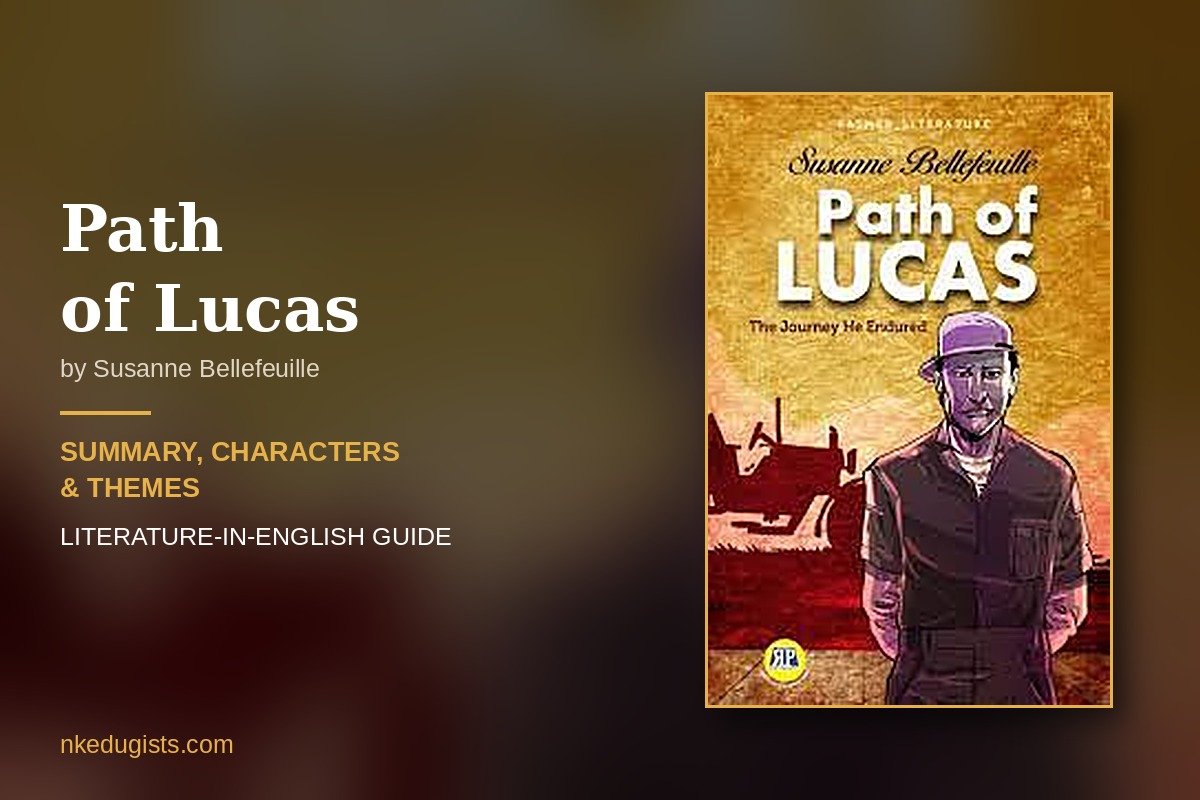
Path of Lucas by Susanne Bellefeuille Summary – About the Author ( Susanne Bellefeuille ) is a Canadian author, social service worker and inspirational mentor. She studied Social Service Work at St. Lawrence College in Cornwall, Ontario, Canada.
Before becoming an author, Bellefeuille worked with people with intellectual disabilities, offering professional assistance, guidance and support. Her personal experiences also influenced her outlook on family, education, personal development and the importance of helping others.
Path of Lucas: The Journey He Endured is based on true events in the author’s family. Through the story, Bellefeuille presents the experiences of an ordinary man whose life is shaped by family responsibilities, difficult decisions, personal sacrifices and unexpected challenges.
The Path of Lucas by Susanne Bellefeuille novel reflects her interest in family relationships, human struggles, love and perseverance.
Background to the Novel “Path of Lucas by Susanne Bellefeuille”
Path of Lucas: The Journey He Endured is a biographical narrative based on real family experiences. Published by Balboa Press in December 2015, the book tells the story of Lucas Clarkson and the challenges he faces while trying to provide for and keep his family together.
The story is set mainly in Canada and covers several decades, beginning in the 1950s. It explores the experiences of a young man who falls in love, starts a family and discovers that achieving his personal ambitions sometimes means making sacrifices for the people he loves.
Lucas dreams of becoming a mechanic, but family circumstances and his father’s declining health affect his plans. As he takes on greater responsibilities, he encounters financial difficulties, family illness, bereavement and other painful experiences.
The novel also examines the effects of unresolved childhood experiences on adult life through the character of Isabelle, Lucas’s wife. Her struggles become an important part of the family’s journey.
Bellefeuille uses Lucas’s experiences to explore the meaning of commitment, family responsibility, faith, love and endurance.
Plot Summary of Path of Lucas by Susanne Bellefeuille
Path of Lucas: The Journey He Endured tells the story of Lucas Clarkson, a Canadian man whose life is marked by love, family responsibilities, difficult choices and personal losses.
The novel opens with Lucy, Lucas’s adult daughter, travelling from Kingston, Ontario, to visit her father in Alexandria. During the journey, she is involved in a serious road accident and suffers a severe head injury. She is taken to the hospital and falls into a coma.
Lucas is deeply worried about his daughter. While waiting at the hospital, he begins telling her the story of his life, hoping that she can hear him and respond.
His account takes readers back to 1950s Ontario, when he is a seventeen-year-old young man living with his parents and siblings. He helps his father on the family farm, although his personal ambition is to become a mechanic.
Lucas meets Isabelle, a young woman from a financially struggling family. Although Isabelle initially has difficulty speaking English, the two gradually develop a relationship. Their love eventually leads to marriage and the beginning of their family life.
As the years pass, Lucas and Isabelle raise their children while facing different challenges. Lucas pursues his ambition of working as a mechanic, but his father’s declining health eventually creates pressure for him to return home and assist with the family farm.
The family experiences several difficult events, including illness, the death of loved ones and financial and personal struggles. Isabelle also faces serious mental health difficulties connected to painful experiences from her childhood. Lucas’s commitment to his wife and children becomes particularly important during these periods.
Through these experiences, Lucas must repeatedly choose between his personal dreams and his responsibilities to his family.
The story moves between Lucy’s hospital situation and Lucas’s memories of his past. Together, these experiences reveal the sacrifices, disappointments, love and determination that shape his life.
Ultimately, the novel presents the journey of a man who discovers that a meaningful life is not necessarily one without hardship, but one in which love, commitment and perseverance remain important.
Setting of the Novel and Its Significance of Path of Lucas by Susanne Bellefeuille Summary
The novel is set in Canada, mainly in the province of Ontario. Its events span several decades, beginning in the 1950s and extending into the later years of Lucas’s life.
A. Alexandria, Ontario
Alexandria is the main setting associated with Lucas’s childhood and family life. It is a small community where Lucas grows up with his parents and siblings. The family farm also plays an important role in his early experiences.
Significance: Alexandria represents Lucas’s family background, childhood memories and responsibilities. His connection to the community and the family farm influences several important decisions in his adult life.
B. The Family Farm
The Clarkson family farm is an important location in the novel. Lucas works with his father there, even though he dreams of pursuing a different career.
Significance: The farm represents family responsibility and the conflict between personal ambition and duty. Lucas’s decision to return to help his ageing father shows how family obligations affect his plans.
C. Uxbridge, Ontario
Uxbridge is another important location in Lucas’s journey. He moves there to pursue work as a mechanic, bringing him closer to the career he has always wanted.
Significance: Uxbridge represents Lucas’s attempt to achieve his personal ambition and build a future outside the family farm.
D. Kingston, Ontario
Kingston is where Lucy lives and works as an adult. It is also the place from which she begins her journey to visit her father before the accident.
Significance: Kingston connects the present-day storyline with Lucas’s family history. It helps establish the relationship between Lucy and her father and introduces the event that leads Lucas to recount his life.
Overall Significance of the Setting
The Canadian settings reflect the changes in Lucas’s life, from his early years on a rural farm to his working life and later family experiences. The movement between these locations also shows how personal ambitions, family relationships and responsibilities shape his journey.
Chapter-by-Chapter of Path of Lucas by Susanne Bellefeuille Summary
Chapter 1: Lucy’s Accident
The novel opens with Lucy Ferguson leaving work in Kingston, Ontario, to visit her father, Lucas, in Alexandria. During her journey, thick fog reduces visibility on the highway. Another vehicle enters her lane, forcing her to swerve. She loses control of her car and crashes into an electrical pole. The other driver leaves the scene.
Lucy is rescued and rushed to the hospital, where doctors discover that she has suffered a serious head injury and fallen into a coma. Her husband, Mark, is informed and immediately rushes to the hospital. He also contacts Lucas and their children.
When Lucas arrives, he is devastated by his daughter’s condition. Sitting beside her, he begins recounting his own life, hoping that she will recover. He starts with his childhood and the events surrounding his meeting with Isabelle, Lucy’s mother.
Chapter 2: Lucas Meets Isabelle
The story moves back to the summer of 1956. Lucas is seventeen years old and lives with his parents, John and Elizabeth Clarkson, on their farm in Alexandria, Ontario.
He is proud of his first car, a red 1949 Studebaker. One evening, his father asks him to drive into town to purchase tools and materials needed for repairing the farm’s fences.
While driving along the country road, Lucas notices two girls walking home. He recognises them as the daughters of Mr Bourgeois, a farmer known to his father. He offers them a lift.
The girls introduce themselves as France and Isabelle Bourgeois. Lucas is immediately attracted to Isabelle, the younger sister, who is shy and speaks little. When they arrive home, Isabelle thanks him in French by saying “Merci.” Their brief exchange leaves a strong impression on Lucas, who realises that he wants to know her better.
The chapter also introduces Lucas’s family background, including his parents, siblings and their life on the farm. His upbringing in a supportive family helps explain the values and expectations that influence his later decisions.
Major Events in the Novel Path of Lucas by Susanne Bellefeuille
The following events are central to the development of the plot in Path of Lucas: The Journey He Endured.
- Lucy’s car accident: Lucy is involved in a serious road accident while travelling to visit her father, Lucas. She suffers a severe head injury and falls into a coma.
- Lucas begins recounting his life: While sitting beside Lucy in the hospital, Lucas tells her the story of his life, hoping that hearing his voice and memories will help her recover.
- Lucas meets Isabelle: As a seventeen-year-old, Lucas meets Isabelle Bourgeois and becomes interested in her. Their meeting marks the beginning of their relationship.
- Lucas and Isabelle fall in love: Despite difficulties arising from Isabelle’s family circumstances and painful childhood experiences, their relationship develops into a serious commitment.
- Lucas and Isabelle start a family: Isabelle becomes pregnant, and the couple marry. They eventually have five children: Richard, Johnny, Steve, Lucy and Thomas.
- Lucas pursues his ambition of becoming a mechanic: Lucas gets an opportunity to work as a mechanic in Uxbridge. However, his father’s declining health forces him to reconsider his plans and return to help with the family farm.
- Steve dies in a plane crash: Lucas loses his childhood friend Steve, who had pursued his dream of becoming a pilot. His death adds to the tragedies Lucas experiences.
- Isabelle develops serious mental health difficulties: Painful childhood experiences contribute to Isabelle’s psychological struggles. She eventually develops psychotic depression, placing considerable pressure on her family.
- Lucas helps Isabelle through her illness: Lucas remains committed to his wife and supports her through treatment and recovery. His patience and devotion become important parts of their family story.
- The family experiences further illness and bereavement: Lucas faces several painful events, including his father’s illness, his son Richard’s health problems, the death of family members and other personal difficulties.
- Richard dies from cancer: After undergoing surgery for cancer, Richard later dies. His death deeply affects Lucas and the rest of the family.
- Isabelle dies: Isabelle dies from a heart attack on 10 June 1993, leaving Lucas to face another painful loss.
- Lucy recovers from her coma: After Lucas finishes recounting his life, Lucy regains consciousness and is reunited with her family.
- Lucas dies: Shortly after Lucy’s recovery, Lucas suffers a heart attack and dies outside her hospital room. Lucy later delivers the eulogy at his funeral.
These events reveal the central struggles of the novel: family responsibility, love, personal sacrifice, illness, bereavement and perseverance.
Lucas Clarkson
Lucas Clarkson is the protagonist of the novel. He is a hardworking, responsible and devoted family man whose life is shaped by love, sacrifice and difficult choices.
As a young man, Lucas dreams of becoming a qualified mechanic. However, when his father’s health deteriorates, he gives up his plans in Uxbridge and returns to Alexandria to help with the family farm.
He also demonstrates great commitment to Isabelle when she experiences serious psychological difficulties. He remains by her side and supports her through treatment and recovery.
Character traits:
- Selfless and responsible
- Loving and patient
- Hardworking and determined
- Devoted to his wife and children
Significance: Lucas represents family commitment and perseverance. His experiences show the sacrifices people sometimes make for those they love.
Isabelle Bourgeois Clarkson
Isabelle is Lucas’s wife and the mother of their five children. She comes from a troubled family background and experiences physical and emotional abuse during her childhood.
Her relationship with Lucas provides her with love and support, but the effects of her early experiences continue to affect her adult life. She later experiences serious psychological difficulties, and Lucas plays an important role in supporting her recovery.
Despite her struggles, Isabelle remains an important member of the family and shares many years of marriage with Lucas.
Character traits:
- Loving and devoted
- Emotionally vulnerable
- Family-oriented
- Resilient
Significance: Isabelle’s experiences reveal how painful childhood experiences can affect a person’s adult relationships and wellbeing.
Lucy Ferguson
Lucy is Lucas and Isabelle’s only daughter. She is the central character in the present-day storyline.
The novel begins with Lucy’s serious road accident while travelling to visit her father. She suffers a severe head injury and falls into a coma.
Lucas sits beside her in the hospital and recounts his life story, hoping that she will recover. Lucy eventually regains consciousness, allowing her family to reunite with her.
Character traits:
- Loving and family-oriented
- Resilient
- Important to her father’s emotional life
Significance: Lucy connects the present-day events with Lucas’s memories. Her accident provides the framework through which the reader learns about his life.
John Clarkson
John is Lucas’s father and the head of the Clarkson family. He owns the family farm in Alexandria, where Lucas grows up and learns the importance of hard work.
As his health deteriorates, John asks Lucas to return and help manage the farm. This request forces Lucas to reconsider his ambition of becoming a mechanic.
Character traits:
- Hardworking
- Family-conscious
- Responsible
Significance: John’s declining health creates one of the major conflicts in Lucas’s life: choosing between personal ambition and family responsibility.
Lizabeth Clarkson
Elizabeth is Lucas’s mother and John’s wife. She is a caring mother who helps support the family and looks after her grandchildren.
She also welcomes Isabelle into the Clarkson family and provides support when Isabelle experiences psychological difficulties.
In her later years, Elizabeth develops Alzheimer’s disease and eventually dies.
Character traits:
- Caring and supportive
- Patient
- Family-oriented
Significance: Elizabeth represents maternal love and the importance of family support during difficult periods.
Steve Lewis
Steve Lewis is Lucas’s childhood friend. Their friendship begins when they are young, and he remains an important person in Lucas’s life.
Steve encourages Lucas to pursue his ambitions and supports his relationship with Isabelle. He later joins the Air Force and follows his dream of becoming a pilot.
His life is tragically cut short in a plane crash, leaving Lucas deeply affected by his death.
Character traits:
- Loyal
- Encouraging
- Ambitious
- Supportive
Significance: Steve represents friendship, ambition and the importance of pursuing one’s dreams.
France Bourgeois
France is Isabelle’s elder sister. She helps Isabelle with English, which makes communication between Isabelle and Lucas easier when they first meet.
She remains connected to Isabelle’s life and attends important family occasions, including her sister’s wedding.
France later develops health problems and dies from complications associated with type 2 diabetes, according to the available study accounts.
Character traits:
- Helpful
- Supportive
- Caring towards her sister
Significance: France is important to the development of Lucas and Isabelle’s relationship and to the story of Isabelle’s family.
Richard Clarkson
Richard is the eldest son of Lucas and Isabelle. He experiences serious health difficulties, including meningitis when he is younger. Later, he develops cancer and undergoes surgery.
Despite the family’s hopes, Richard eventually dies from his illness. His death becomes another painful experience in Lucas’s life.
Character traits:
- Family-oriented
- Courageous in facing illness
Significance: Richard’s illness and death contribute to the novel’s exploration of family suffering, loss and the unpredictability of life.
Other Supporting Characters in the Novel Path of Lucas by Susanne Bellefeuille
- Mr Bourgeois: Isabelle and France’s father. His treatment of Isabelle during her childhood contributes to her painful family experiences.
- Mrs Bourgeois: Isabelle and France’s mother, who is also associated with Isabelle’s difficult childhood.
- Julia: Helps Isabelle during her pregnancy by taking her to the hospital.
- Jim: Gives Lucas an opportunity to work as a mechanic and encourages his career ambitions.
- Dr Bates: The doctor who examines Isabelle and confirms her pregnancy.
- Mark: Lucy’s husband, who is part of her family during the hospital events.
- Thomas, Johnny and Steve Clarkson: Lucas and Isabelle’s sons, who form part of the family story.
Themes in the Novel “Path of Lucas by Susanne Bellefeuille” Summary
Love and Devotion
Love and devotion are central themes in the novel. Lucas demonstrates his love for Isabelle through his commitment to her, especially when she experiences serious mental health difficulties.
He supports her during her illness, puts aside some of his personal interests and remains committed to their marriage. His relationship with his children also shows how much he values his family.
Example: When Isabelle becomes seriously ill, Lucas gives up his employment to care for her and support her recovery.
Family and Sacrifice
The novel shows that family responsibilities sometimes require people to make difficult sacrifices. Lucas repeatedly places the needs of his family above his personal ambitions.
Although he dreams of becoming a qualified mechanic, he returns to help his father with the family farm when John’s health deteriorates. Later, he also makes sacrifices to support Isabelle.
Example: Lucas gives up his opportunity to pursue his mechanical career in Uxbridge so that he can assist his ageing father.
Child Abuse and Childhood Trauma
The novel examines how painful childhood experiences can affect people long after they become adults. Isabelle and her sister France experience abuse within their childhood home.
These experiences contribute to Isabelle’s emotional difficulties later in life. Her struggles demonstrate that childhood trauma can have lasting consequences for an individual’s mental and emotional wellbeing.
Example: Isabelle’s difficult relationship with her parents forms part of the background to her later psychological struggles.
Mental Illness and Depression
Mental illness is an important subject in the novel, particularly through Isabelle’s experience of psychotic depression.
Her illness affects her relationship with Lucas and the rest of the family. Lucas has to adjust his life to support her, and the family experiences considerable emotional and practical difficulties.
Example: When Isabelle becomes seriously ill, Lucas leaves his job and uses his savings while caring for her and supporting her treatment.
Perseverance and Resilience
Perseverance is demonstrated through Lucas’s ability to continue facing difficulties without abandoning his responsibilities.
He experiences financial pressure, family illness, the death of loved ones and the painful loss of his wife. Despite these experiences, he continues to care for his family.
Example: Lucas remains committed to his family despite the repeated difficulties that affect his personal ambitions and family life.
Friendship and Loyalty
Friendship is another important theme. The relationship between Lucas and Steve Lewis demonstrates the value of companionship and encouragement.
Steve is Lucas’s childhood friend, and their friendship remains important as they grow older. Steve also encourages Lucas during important stages of his life.
Example: Steve supports Lucas during his youth and remains an important friend until his death in a plane crash.
Death and Mortality
The novel presents death as an unavoidable part of human existence. Lucas experiences the deaths of people close to him, including his son Richard, his parents, his wife Isabelle and his friend Steve.
These losses affect him deeply and show how unpredictable life can be.
Example: Isabelle’s death from a heart attack in 1993 is one of the most painful events in Lucas’s life. The later hospital events involving Lucy also remind readers of life’s uncertainty.
Faith and Hope
Faith and hope help the characters face difficult circumstances. Lucas continues to believe in the importance of family and holds on to hope even when life becomes painful.
His decision to tell Lucy his life story while she is in a coma also demonstrates his hope that she will recover.
Example: Lucas continues speaking to Lucy in the hospital, hoping that she can hear him and eventually regain consciousness.
Personal Ambition versus Family Responsibility
The novel explores the conflict between pursuing personal dreams and fulfilling family obligations.
Lucas wants to become a qualified mechanic and build a career, but his father’s declining health changes his plans. He must decide whether to pursue his ambition or return to support his family.
Example: Lucas gives up his opportunity in Uxbridge and returns to Alexandria to help his father manage the farm.
Overall Message of the Themes
Through Lucas’s experiences, Susanne Bellefeuille shows that life can involve difficult choices, family struggles, illness and bereavement. The novel emphasises the importance of love, responsibility, friendship, faith and perseverance when facing life’s challenges.
Literary Devices and Techniques in the Novel of Path of Lucas by Susanne Bellefeuille
Susanne Bellefeuille uses different narrative techniques and language features to present Lucas’s experiences and the struggles of his family.
Flashback
Flashback is a narrative technique in which the writer takes the reader from the present action to events that happened in the past.
The novel uses flashback when Lucas recounts his life story to his daughter, Lucy, while she lies unconscious in the hospital. His memories take the reader back to his youth, his meeting with Isabelle, their marriage and the challenges they experience as a family.
Example: Lucas begins recounting his life from his teenage years in Alexandria, Ontario, after Lucy’s accident.
Frame Narrative
A frame narrative is a story that contains another story within it.
The present-day hospital situation provides the framework for Lucas’s life story. Lucy’s accident introduces the main narrative, while Lucas’s memories form the story within that framework.
Example: The novel opens with Lucy’s accident and closes with the events surrounding her recovery and Lucas’s death.
Symbolism
Symbolism occurs when a person, object or event represents a deeper meaning.
Lucy’s coma can be interpreted as a symbol of the uncertainty and fragility of human life. It also provides an opportunity for Lucas to reflect on his experiences and the importance of family.
The title, Path of Lucas, also carries symbolic meaning. The path represents the different experiences, decisions, sacrifices and difficulties Lucas encounters throughout his life.
Irony
Irony occurs when an outcome is different from what is expected.
An important example is the ending of the novel. Lucas spends time beside Lucy’s hospital bed, hoping that she will regain consciousness. Lucy eventually recovers, but Lucas dies shortly afterwards.
The outcome is ironic because the father who hopes to see his daughter recover does not live long enough to enjoy her recovery.
Motif
A motif is an idea, image or element that recurs throughout a literary work and helps develop its central concerns.
The hospital is an important recurring motif in the novel. Several family experiences involve hospital visits, treatment and illness. The story also begins and ends around Lucy’s hospital experience.
Significance: The recurring hospital setting reinforces the themes of illness, suffering, hope, family devotion and mortality.
Diction
Diction refers to the writer’s choice of words and expressions.
Bellefeuille uses everyday English to make the story accessible. She also includes French words and expressions, reflecting the linguistic background of Isabelle and the Canadian setting.
Examples include:
- Merci – thank you.
- Oui – yes.
Significance: The use of French expressions helps establish Isabelle’s background and shows the language difference between her and Lucas during their early relationship.
Dialogue of Path of Lucas
Dialogue refers to conversations between characters.
Bellefeuille uses dialogue to reveal relationships, emotions and important decisions. Conversations between Lucas and Isabelle help readers understand their relationship, while discussions between Lucas and his father reveal the conflict between Lucas’s career ambition and his family responsibilities.
Significance: Dialogue makes the characters’ experiences more immediate and helps move the plot forward.
Tone of Path of Lucas by Susanne Bellefeuille
Tone refers to the writer’s attitude towards the subject being presented.
The novel has a reflective and emotional tone. Lucas’s account of his life brings back memories of love, family happiness, illness and bereavement.
There is also a hopeful tone in the hospital storyline because Lucas continues speaking to Lucy despite her unconscious condition.
Humour of Path of Lucas by Susanne Bellefeuille
Humour is the use of amusing situations, expressions or conversations to entertain readers.
Although the novel deals with serious family problems, some everyday conversations and interactions provide lighter moments. These moments help balance the emotional weight of the story.
Historical and Cultural References Path of Lucas by Susanne
The novel presents aspects of Canadian life during the 1950s and later decades. Its references to rural farming, family life, employment and the social environment of Ontario help readers understand the period in which Lucas grows up.
Significance: These references make the setting more realistic and show how the characters’ experiences are connected to their social and historical environment.
Lessons from the Novel Path of Lucas by Susanne Bellefeuille Summary
Path of Lucas: The Journey He Endured teaches several important lessons about family, relationships and human endurance.
- Family responsibility is important: Lucas demonstrates that family members sometimes have to make sacrifices to support one another.
- Love requires commitment: Lucas’s relationship with Isabelle shows that love involves patience, understanding and support, particularly during difficult periods.
- Childhood experiences can affect adulthood: Isabelle’s experiences show that abuse and trauma can have lasting effects on a person’s emotional wellbeing.
- Mental illness should be treated with understanding: The way Lucas supports Isabelle highlights the importance of compassion and appropriate care for people experiencing mental health difficulties.
- Personal ambition sometimes involves difficult choices: Lucas’s decision to return to the family farm demonstrates the conflict between pursuing personal dreams and fulfilling family obligations.
- Friendship is valuable: Lucas’s relationship with Steve Lewis shows how friends can encourage and support one another.
- Life is unpredictable: The illnesses and deaths experienced by Lucas’s family remind readers that life can change unexpectedly.
- Hope can provide strength during difficult times: Lucas continues hoping for Lucy’s recovery even when the doctors give little encouragement.
- People should appreciate their loved ones: The novel reminds readers that family relationships and time spent with loved ones are valuable.
- Perseverance is important: Lucas’s life demonstrates the importance of continuing to face challenges and fulfil responsibilities despite disappointments and losses.
WAEC/NECO Literature-in-English Practice Questions and Answers on Path of Lucas by Susanne Bellefeuille Summary
The following questions are revision exercises based on the novel. They are not presented as official WAEC or NECO past questions.
A. Objective Questions
1. Who is the central character in Path of Lucas: The Journey He Endured?
A. Steve Lewis
B. Lucas Clarkson
C. Mark Ferguson
D. John Bourgeois
Answer: B. Lucas Clarkson
2. Who is Lucas’s wife?
A. France
B. Lucy
C. Isabelle
D. Elizabeth
Answer: C. Isabelle
3. Where does Lucas grow up?
A. Kingston
B. Alexandria
C. Toronto
D. Ottawa
Answer: B. Alexandria
4. What is Lucas’s career ambition when he is young?
A. To become a doctor
B. To become a teacher
C. To become a mechanic
D. To become a pilot
Answer: C. To become a mechanic
5. Who is Lucy in the novel?
A. Lucas’s sister
B. Lucas’s daughter
C. Isabelle’s sister
D. Steve’s wife
Answer: B. Lucas’s daughter
6. What happens to Lucy at the beginning of the novel?
A. She moves abroad.
B. She gets married.
C. She is involved in a serious car accident.
D. She loses her job.
Answer: C. She is involved in a serious car accident.
7. Who is Steve Lewis?
A. Lucas’s childhood friend
B. Lucas’s father
C. Isabelle’s brother
D. Lucy’s husband
Answer: A. Lucas’s childhood friend
8. Why does Lucas return to help his father?
A. He wants to become a farmer.
B. His father is experiencing declining health.
C. He loses his job.
D. Isabelle asks him to leave Uxbridge.
Answer: B. His father is experiencing declining health.
9. Which literary technique is used when Lucas recounts his past experiences?
A. Personification
B. Flashback
C. Pun
D. Onomatopoeia
Answer: B. Flashback
10. What does the hospital represent as a recurring element in the novel?
A. Wealth and success
B. Illness, suffering and hope
C. Political conflict
D. Education and ambition
Answer: B. Illness, suffering and hope
11. Which language feature reflects Isabelle’s background?
A. Latin expressions
B. French expressions
C. Arabic expressions
D. German expressions
Answer: B. French expressions
12. Which of the following best describes Lucas?
A. Selfish and careless
B. Responsible and devoted
C. Dishonest and cruel
D. Lazy and irresponsible
Answer: B. Responsible and devoted
13. What is one of the major conflicts in Lucas’s life?
A. Choosing between personal ambition and family responsibility
B. Choosing between two political parties
C. Fighting a legal battle
D. Competing for a government position
Answer: A. Choosing between personal ambition and family responsibility
14. Which theme is strongly developed through Isabelle’s experiences?
A. Political corruption
B. Childhood trauma and mental illness
C. Religious conflict
D. Colonialism
Answer: B. Childhood trauma and mental illness
15. What does Lucas’s life mainly demonstrate?
A. The importance of wealth
B. The value of fame
C. Love, sacrifice and perseverance
D. The dangers of education
Answer: C. Love, sacrifice and perseverance
B. WAEC?NECO Essay Questions on “Path of Lucas by Susanne Bellefeuille” Summary
1. Discuss the character of Lucas Clarkson in the novel.
- Lucas is the central character.
- He is hardworking and responsible.
- He dreams of becoming a mechanic.
- He sacrifices his career plans to help his father.
- He demonstrates love and devotion towards Isabelle.
- He remains committed to his children despite family difficulties.
- His experiences demonstrate perseverance and family responsibility.
2. Examine the relationship between Lucas and Isabelle.
- They meet when Lucas is seventeen.
- Their relationship develops despite their language differences.
- Lucas demonstrates patience and understanding.
- They eventually marry and raise a family.
- Isabelle experiences psychological difficulties.
- Lucas supports her through her illness.
- Their relationship illustrates love, commitment and sacrifice.
3. Discuss the theme of family responsibility in the novel.
- Lucas grows up in a family where hard work and responsibility are important.
- His father’s declining health affects his career plans.
- He returns to help manage the family farm.
- He supports Isabelle during her illness.
- He remains concerned about his children and their wellbeing.
- These experiences show the importance of family commitment.
4. Explain the significance of Lucy’s accident to the development of the plot.
- The accident introduces the present-day storyline.
- Lucy’s coma creates the situation in which Lucas recounts his past.
- Lucas’s memories reveal his relationship with Isabelle and his family experiences.
- The hospital setting connects the beginning and ending of the narrative.
- Lucy’s recovery and Lucas’s death provide the conclusion.
5. Examine the theme of mental illness in the novel.
- Isabelle’s childhood experiences contribute to her emotional difficulties.
- She later experiences serious psychological problems.
- Her illness affects her marriage and family life.
- Lucas supports her and seeks help for her condition.
- The novel encourages understanding and compassion towards people experiencing mental illness.
6. Discuss the significance of the title, Path of Lucas: The Journey He Endured.
- The title refers to Lucas’s life journey.
- His path includes love, marriage and family responsibilities.
- He faces financial challenges, illness and bereavement.
- He makes sacrifices to support his family.
- The word “endured” emphasises his ability to face difficult experiences.
- The title captures the central concern of the novel: perseverance through life’s challenges.
Frequently Asked Questions on Path of Lucas by Susanne Bellefeuille Summary
1. Who wrote Path of Lucas: The Journey He Endured?
The novel was written by Susanne Bellefeuille, a Canadian author.
2. What is Path of Lucas about?
It tells the life story of Lucas Clarkson, a Canadian man whose experiences involve love, marriage, family responsibilities, personal sacrifices, illness and bereavement.
3. Who is the main character in the novel?
Lucas Clarkson is the main character.
4. Who is Isabelle in Path of Lucas?
Isabelle Bourgeois is Lucas’s wife and the mother of his children. Her childhood experiences and later mental health difficulties are important to the story.
5. Who is Lucy?
Lucy Ferguson is Lucas and Isabelle’s daughter. Her car accident and subsequent coma provide the framework for Lucas’s recollection of his life.
6. Where is the novel set?
The novel is set mainly in Ontario, Canada, particularly around Alexandria. Other locations include Uxbridge and Kemptville.
7. What are the major themes of the novel?
The major themes include love and devotion, family responsibility, sacrifice, childhood trauma, mental illness, friendship, perseverance, faith and death.
8. What is the significance of the title?
The title represents Lucas’s journey through life’s challenges, difficult decisions, family responsibilities and personal losses.
9. How many chapters does the novel have?
The available chapter-by-chapter study guide identifies 35 chapters.
What literary techniques are used in the novel?
The novel uses flashback, frame narrative, symbolism, irony, motif, dialogue, diction and other narrative techniques.
Conclusion about Path of Lucas by Susanne Bellefeuille Summary
Path of Lucas: The Journey He Endured by Susanne Bellefeuille presents the life of a man whose experiences reveal the importance of love, family responsibility, sacrifice and perseverance. Through Lucas Clarkson’s relationship with Isabelle and his commitment to his children, the author explores the difficulties people encounter while trying to keep their families together.
For WAEC and NECO candidates, understanding Lucas’s character, the relationship between Lucas and Isabelle, the major themes and the structure of the narrative will be useful when answering examination questions on the text.
