


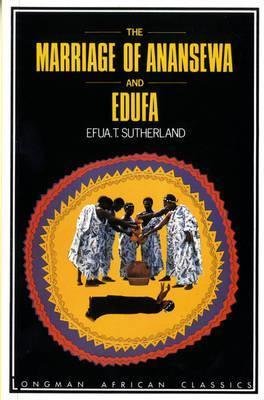
Check out “The Marriage of Anansewa Summary” here. The Marriage of Anansewa by Efua Sutherland is a Ghanaian play that explores marriage, family expectations, money, deception and the position of women in society.
Through the story of Ananse and his daughter, Anansewa, the playwright examines how traditional marriage arrangements can become complicated when financial interests and personal choices come into conflict.
The play is also known for its use of Anansegoro, a dramatic form rooted in Akan storytelling traditions. Its blend of narration, music, humour and audience participation makes it an important work in African drama.
This study guide provides a summary of the play, explains its major events and characters, examines its themes and dramatic techniques, and includes WAEC practice questions to help students understand and revise the text.
About the Playwright
Efua Theodora Sutherland (1924–1996) was a Ghanaian playwright, poet, educator, theatre director, researcher and children’s author. She played an important role in the development of modern Ghanaian theatre and promoted the use of African storytelling, music, dance and traditional performance in drama.
She helped establish the Ghana Society of Writers in 1957 and founded the Ghana Experimental Theatre in Accra in 1958. In 1960, the Experimental Theatre developed into the Ghana Drama Studio, which became an important centre for training Ghanaian playwrights and developing new theatrical works.
Her notable plays include Foriwa (1962), Edufa (1967) and The Marriage of Anansewa (1975). Her works frequently explore cultural identity, social change, the position of women and the relationship between traditional values and modern life.
Background to The Marriage of Anansewa
The Marriage of Anansewa is a Ghanaian storytelling drama by Efua Theodora Sutherland. Published in 1975, the play combines Akan oral storytelling traditions with modern theatrical techniques.
The play draws on the traditional Ananse stories of the Akan people. Ananse, represented as a clever spider, is a popular trickster figure in Akan oral literature. He often uses intelligence, deception and quick thinking to overcome difficulties or achieve personal benefits.
Sutherland develops this familiar figure into George Kweku Ananse, a modern father who uses his daughter’s marriage prospects to improve his financial position.
The play is written in the form of Anansegoro, a storytelling dramatic form developed by Sutherland from Akan oral performance. It combines a Storyteller, songs, dance, audience participation and dramatic action.
Plot Summary of The Marriage of Anansewa
The play centres on George Kweku Ananse, a poor but clever man who wants to improve his financial position. He has a beautiful and educated daughter named Anansewa, whose marriage he sees as an opportunity to obtain wealth and secure a good husband for her.
Ananse decides to approach four wealthy chiefs with the intention of arranging marriages between them and his daughter. He sends letters to the chiefs, accompanied by Anansewa’s photograph, inviting them to express interest in marrying her. However, he does not tell any of the chiefs that three others are pursuing the same woman.
Anansewa initially helps her father type the letters without knowing their purpose. When she discovers that he is arranging her marriage, she objects to being treated like an item being sold to a customer. Ananse persuades her by explaining his financial difficulties and describing Chief-Who-Is-Chief as a handsome, respected and courageous man.
Anansewa becomes interested in Chief-Who-Is-Chief, particularly because the chief has already provided money to support her secretarial education. She eventually agrees to leave the arrangement in her father’s hands, trusting that he will secure a suitable husband for her.
The four chiefs respond positively and begin sending gifts to Ananse. Their generosity changes his circumstances. He improves his house, buys better clothes and enjoys the respect that comes with his new appearance of wealth.
However, Ananse’s plan creates a serious problem when all four chiefs choose the same day for the customary head-drink ceremony. This ceremony formally establishes the marriage arrangement. Ananse realises that he cannot satisfy all four chiefs without exposing his deception.
To escape the difficulty, he devises another trick. He arranges for Anansewa to pretend to be dead. He organises an outdooring ceremony and invites his mother, Aya, his aunt Ekuwa and Christie. During the ceremony, he sends Aya and Ekuwa away with a false story that enemies have set fire to their cocoa farm in their hometown.
Afterwards, news of Anansewa’s supposed death is sent to the four chiefs. Their messengers arrive with condolences and gifts, but their messages reveal the different motives behind the chiefs’ interest in marrying her. Three of the chiefs have ulterior motives, while Chief-Who-Is-Chief demonstrates a deeper commitment.
Through his messengers, Chief-Who-Is-Chief accepts total responsibility for Anansewa and provides the requirements for her funeral. He also expresses his intention to do for her what a husband would do for his wife, even though he believes she has died.
Ananse is overwhelmed by the chief’s response. He enters a trance, invokes his ancestors and calls for Anansewa to return to life. Anansewa wakes as if from a deep sleep and indicates that she could hear Chief-Who-Is-Chief calling her.
The play ends happily with the prospect of Anansewa becoming the bride of Chief-Who-Is-Chief. The ending exposes the difference between material interest and genuine commitment. It also shows how Ananse’s trickery, although connected to his poverty and desire to secure a good husband for his daughter, turns marriage into a commercial arrangement.
Setting and Its Significance of The Marriage of Anansewa Summary
1. Ananse’s home
Much of the domestic action takes place in Ananse’s home. It is where he plans his scheme, dictates letters, receives visitors and displays the changes brought about by the chiefs’ gifts.
The house reflects Ananse’s initial poverty and his later desire for comfort and social recognition. Its improvement also demonstrates how much he benefits from the gifts sent by the chiefs.
2. The wider Ghanaian community
The play is set in a Ghanaian social environment where traditional marriage customs, family relationships, wealth and social status influence people’s decisions.
The exact town is not identified. The setting is generally understood as a town in post-independence Ghana rather than a specifically named community.
3. The storytelling performance space
The stage is not presented as a completely realistic location. The Storyteller, players and Property Man openly participate in the performance.
This arrangement reminds the audience that they are watching a storytelling performance. It also reflects the communal nature of traditional African theatre, in which performers and spectators can interact.
Significance of the setting
The setting allows Sutherland to examine the meeting of traditional customs and modern social pressures. Through Ananse’s home and the wider community, she explores poverty, marriage, wealth, education and the position of women.
The performance space is equally important because it allows traditional storytelling techniques to become part of modern theatre.
Act-by-Act Summary Of The Marriage of Anansewa
The play has four acts. The following summaries follow the major developments in each act.
Act One: Ananse’s Marriage Scheme
Ananse introduces his financial difficulties and explains his desire to improve his life. He decides to use Anansewa’s beauty and marriage prospects to attract wealthy suitors.
He selects four chiefs and sends each of them a letter with Anansewa’s photograph. Each chief is encouraged to believe that he has a genuine opportunity to marry her, without knowing that three other chiefs are being approached.
Anansewa helps type the letters before understanding their purpose. When she discovers what her father is doing, she objects to being treated as a commodity. Ananse reminds her of the family’s financial difficulties and persuades her to cooperate.
He also describes Chief-Who-Is-Chief favourably, drawing attention to his appearance, courage and reputation. Since the chief has already helped pay Anansewa’s secretarial school fees, she becomes interested in him and agrees to leave the arrangement in her father’s hands.
Act Two: The Chiefs’ Gifts and Ananse’s New Lifestyle
The four chiefs respond to Ananse’s letters and begin sending gifts. Their generosity improves Ananse’s financial circumstances and allows him to renovate his house and purchase better clothes.
His new appearance attracts greater respect from people around him. The Postman, for example, begins treating him with more importance after his financial position improves.
Ananse enjoys the benefits of his scheme, but the growing interest of the four chiefs creates a problem that he has not properly considered.
Act Three: Ananse’s Difficult Situation
The four chiefs all express their desire to proceed with the customary head-drink ceremony. The difficulty is that they select the same day for the ceremony.
Ananse realises that his deception may be exposed if he tries to satisfy all of them. He therefore plans to make Anansewa pretend to be dead.
He arranges an outdooring ceremony and involves his mother, Aya, his aunt Ekuwa and Christie. He later sends Aya and Ekuwa away using a false story that enemies have set fire to their cocoa farm in their hometown.
Ananse then uses the supposed death of his daughter as a way to manage the competing marriage arrangements and discover which chief demonstrates genuine commitment.
Act Four: Anansewa’s Pretended Death and the Resolution
News of Anansewa’s supposed death is sent to the four chiefs. Their messengers arrive with condolences and gifts.
The messages reveal the chiefs’ different motives. Three of the chiefs have ulterior reasons for wanting to marry Anansewa. Chief-Who-Is-Chief responds differently by accepting responsibility for her and providing the requirements for her funeral.
His messenger explains that the chief wishes to do for Anansewa what a husband would do for his wife. His response demonstrates a commitment that goes beyond completing a customary marriage arrangement.
Ananse is overwhelmed by the chief’s concern and generosity. He invokes his ancestors and calls for Anansewa to return to life. She wakes from her pretended death, and the play concludes with the prospect of her marriage to Chief-Who-Is-Chief.
Major Events in the Play The Marriage of Anansewa Summary
- Ananse decides to use his daughter’s marriage prospects to improve his financial position and secure a suitable husband for her.
- He sends letters and Anansewa’s photograph to four wealthy chiefs.
- Anansewa discovers that her father is arranging her marriage and objects to being treated as a commodity.
- Ananse persuades her to cooperate and describes Chief-Who-Is-Chief favourably.
- The four chiefs send gifts to Ananse.
- Ananse improves his home and lifestyle with the gifts.
- All four chiefs choose the same day for the head-drink ceremony.
- Ananse decides to make Anansewa pretend to be dead.
- He arranges an outdooring ceremony and later sends Aya and Ekuwa away with a false story.
- News of Anansewa’s supposed death is sent to the chiefs.
- The chiefs’ messengers reveal their different motives.
- Chief-Who-Is-Chief accepts responsibility for Anansewa and provides her funeral requirements.
- Ananse invokes his ancestors, and Anansewa wakes from her pretended death.
Major Characters and Characterisation
1. George Kweku Ananse
Ananse is the central character and the father of Anansewa. He is a modern representation of the traditional Akan spider-trickster.
Character traits:
- Clever and cunning.
- Manipulative and deceptive.
- Ambitious and materialistic.
- Resourceful and imaginative.
- Concerned about his daughter’s future, although his methods are questionable.
Ananse uses his intelligence to attract four wealthy chiefs and obtain gifts from them. He manipulates the marriage custom to improve his financial position. He is confident that none of the chiefs has a formal claim to Anansewa until the customary head-drink ceremony takes place.
However, his scheme becomes difficult to control when all four chiefs choose the same date for the ceremony. His decision to fake Anansewa’s death demonstrates his ability to invent another trick when his first plan is threatened.
Ananse is not presented simply as a father who wants money. He also wants to secure a good husband for his daughter and supports her education. Nevertheless, his desire for wealth and comfort leads him to manipulate her marriage prospects for personal benefit.
2. Anansewa
Anansewa is Ananse’s only daughter. She is a beautiful, young and educated woman whose marriage becomes the centre of her father’s scheme.
Character traits:
- Intelligent and educated.
- Beautiful and attractive.
- Respectful towards her father.
- Capable of expressing disagreement.
- Interested in genuine affection and personal choice.
Anansewa objects when she discovers that her father is arranging her marriage without first consulting her. She does not want to be treated as an object that can be sold to a customer.
Her objection is important because it shows that she has a sense of personal dignity and wants a say in her future. She eventually becomes interested in Chief-Who-Is-Chief after hearing about his qualities and learning of his support for her education.
Her decision to trust her father should not be mistaken for a complete absence of personal choice. The play presents her as a young woman whose consent and feelings matter, even though her father initially controls the marriage arrangement.
3. Chief-Who-Is-Chief
Chief-Who-Is-Chief is one of the four wealthy chiefs interested in marrying Anansewa. He is presented as handsome, courageous, respected and generous.
Character traits:
- Generous.
- Sincere.
- Responsible.
- Compassionate.
- Committed.
He supports Anansewa’s education by providing money for her secretarial school fees. He later demonstrates genuine concern when he hears about her supposed death.
Through his messengers, he accepts responsibility for Anansewa and provides the requirements for her funeral. He also expresses his intention to fulfil the responsibilities of a husband.
His response distinguishes him from the other suitors and makes him the preferred husband.
4. Aya
Aya is Ananse’s mother and Anansewa’s grandmother.
Character traits:
- Loving and caring.
- Traditional.
- Wise.
- Concerned about her granddaughter’s future.
Aya wishes for Anansewa to marry a good person who respects other human beings. Her values provide a contrast to Ananse’s materialistic approach to marriage.
Her character represents traditional values based on respect, responsibility and concern for other people.
5. Christina Yamoah (Christie)
Christie is a fashionable and socially experienced woman whom Ananse describes as worldly-wise. She assists Ananse and Anansewa during the marriage scheme.
Character traits:
- Helpful.
- Fashionable.
- Practical.
- Socially intelligent.
- Resourceful.
Christie helps during Anansewa’s outdooring ceremony and takes care of her. She also tries to win Ananse’s affection and impresses Aya in an effort to become Ananse’s wife.
When Anansewa feigns death, Christie takes responsibility for receiving the chiefs’ messengers and their gifts while Ananse pretends to mourn his daughter. She also carefully guards Anansewa’s supposed body to prevent anyone from going too close.
Her character is important because she helps Ananse maintain the deception and plays an active role in the events surrounding the fake death.
6. Ekuwa
Ekuwa is Ananse’s aunt and Aya’s sister.
She understands and accommodates the younger generation. Her participation in Anansewa’s outdooring ceremony shows the involvement of extended family members in important family and social events.
7. The Storyteller
The Storyteller guides the audience through the play.
Functions and characteristics:
- Introduces and explains events.
- Comments on the characters’ behaviour.
- Interacts with the actors and audience.
- Connects different parts of the story.
- Helps control the pace of the performance.
- Recalls earlier events that influence the present action.
The Storyteller is central to the play’s Anansegoro structure. Rather than leaving the audience to follow the action without guidance, the Storyteller explains developments and maintains the connection between performers and spectators.
8. The Four Chiefs
The four chiefs are wealthy suitors who respond to Ananse’s letters. They are not presented as ordinary onstage characters in the same way as Ananse and Anansewa. The audience learns about them mainly through their messengers.
The four chiefs are:
- Chief of Sapaase.
- Chief of the Mines.
- Togbe Klu, Chief of Akate.
- Chief-Who-Is-Chief.
Their interest in Anansewa exposes the relationship between wealth, status, marriage and personal motives. Their different responses to her supposed death help distinguish genuine commitment from ulterior motives.
9. Akwasi and Akosua
Akwasi and Akosua appear in a performance episode that helps explain the customary head-drink arrangement.
Their episode demonstrates that accepting gifts from a suitor does not automatically give him a formal claim over a prospective bride. The customary head-drink ceremony must take place before the marriage arrangement is established.
This episode also helps explain how Ananse is able to receive gifts from the four chiefs without having formally given Anansewa in marriage to any of them.
10. The Property Man
The Property Man is a theatrical figure who performs the role of a stage manager.
Instead of remaining hidden backstage, he is stationed openly on stage and supplies the properties needed by the actors in full view of the audience. When he is not attending to the properties, he can participate in and respond to the performance.
His presence breaks the illusion of a completely realistic stage. It reminds the audience that they are watching a storytelling performance and supports the play’s distinctive theatrical style.
11. The Postman
The Postman delivers letters and helps connect Ananse with the chiefs.
His behaviour also contributes to the play’s criticism of a society that gives greater respect to people who appear wealthy. He begins treating Ananse with more importance after Ananse’s financial position improves.
12. The Chiefs’ Messengers
The messengers deliver the chiefs’ responses, gifts and condolences. Their messages reveal the different reasons behind the chiefs’ interest in Anansewa.
They are particularly important in the final act because their reports help Ananse identify the chief who demonstrates genuine commitment.
Major Themes in The Marriage of Anansewa Summary
1. Marriage as a Transaction
The play examines how marriage can be treated as a financial arrangement rather than a relationship based on mutual affection.
Ananse sends Anansewa’s photograph to four wealthy chiefs and encourages them to compete for her hand. He is interested in the gifts and financial benefits he can obtain from their interest.
His actions turn his daughter’s marriage into something resembling an auction. Anansewa objects because she does not want to be treated as a commodity that can be sold to a customer.
Sutherland uses this situation to question the treatment of women as possessions whose marriages can be arranged mainly for family profit.
2. Trickery and Deception
Trickery is central to the plot. Ananse uses deception to attract four chiefs and obtain gifts from them.
He hides the fact that all four men are competing for the same woman. When their marriage arrangements create a problem, he invents the story of Anansewa’s death.
His actions reflect the traditional trickster character of Ananse in Akan oral literature. However, the play also shows the complications that arise when intelligence and resourcefulness are used for selfish purposes.
3. Poverty and the Desire for Wealth
Ananse’s financial difficulties motivate his marriage scheme. He wants money to improve his lifestyle and support Anansewa’s education.
However, his desire for wealth goes beyond solving his immediate problems. He enjoys the improved house, clothes and social recognition that come with the chiefs’ gifts.
The play examines how poverty can encourage dishonest survival strategies, while also criticising greed and the desire to acquire wealth through the exploitation of other people.
4. Love and Genuine Commitment
The play distinguishes genuine affection from relationships based mainly on wealth and social advantage.
The four chiefs express interest in marrying Anansewa, but their responses to her supposed death reveal their different motives.
Chief-Who-Is-Chief stands out because he accepts responsibility for her even after hearing that she has died. His response demonstrates a commitment that goes beyond simply completing a customary marriage arrangement.
The ending presents genuine love and responsibility as more important than material gifts or social position.
5. Women’s Position and Freedom of Choice
Anansewa’s experience raises questions about women’s freedom to choose their marriage partners.
Her father initially arranges her marriage without seeking her approval. She objects because she does not want to be treated as a commodity.
Although she eventually agrees to cooperate after becoming interested in Chief-Who-Is-Chief, her initial protest remains important. It shows that she wants her feelings and personal wishes to be considered.
The play also presents Christie as a woman who takes an active role in the events, while Aya represents traditional concern for a respectful marriage.
Through these characters, Sutherland examines the position of women and questions the practice of treating them mainly as objects of marriage arrangements.
6. Materialism and Social Status
Ananse’s behaviour reveals the importance some people attach to money, possessions and social recognition.
After receiving gifts from the chiefs, he renovates his house and buys new clothes. The Postman also begins treating him with greater respect.
This change exposes a society in which wealth can influence how people are treated, even when their character has not improved.
The play satirises the tendency to measure a person’s importance by material possessions rather than personal qualities.
7. Tradition and Modernity
The play combines traditional Akan storytelling and marriage customs with modern social experiences.
The head-drink ceremony, outdooring, songs and oral storytelling are traditional elements. Ananse’s use of letters, photography and secretarial education reflects modern life.
Sutherland brings these elements together to show how traditional customs operate in a changing society. She also questions how established customs can be manipulated for selfish financial purposes.
8. Education and Independence
Anansewa’s education is an important part of her character. She is a modern young woman who has received education and wants to have a say in decisions affecting her life.
Chief-Who-Is-Chief’s financial assistance with her secretarial school fees also helps explain why she becomes interested in him.
The play connects education with women’s development, confidence and ability to participate in decisions about their future.
Literary Devices and Dramatic Techniques of The Marriage of Anansewa
1. Anansegoro
Anansegoro is the storytelling dramatic form developed by Sutherland from Akan oral tradition.
The play uses a Storyteller, songs, audience participation, dance, mime and dramatic action. These features create a performance that combines traditional storytelling with modern theatre.
2. Characterisation
The playwright reveals characters through their actions, words and relationships.
For example, Ananse’s letters and fake-death scheme reveal his cunning nature. Anansewa’s objection to being treated as a commodity reveals her intelligence and desire for personal choice.
Chief-Who-Is-Chief’s response to Anansewa’s supposed death reveals his generosity and commitment, while Christie’s actions show her resourcefulness and involvement in Ananse’s plan.
3. Dramatic Irony
The audience knows that Ananse has arranged for Anansewa to pretend to be dead, while the chiefs receive the news as though it were true.
This difference between what the audience knows and what the chiefs believe creates dramatic irony. It also makes the chiefs’ responses more significant because the audience understands that the supposed death is part of Ananse’s deception.
4. Satire
Sutherland uses humour and exaggerated behaviour to criticise social problems.
Ananse’s attempt to profit from his daughter’s marriage satirises greed and the commercialisation of marriage. The Postman’s changed attitude towards Ananse also mocks society’s tendency to respect people mainly because they appear wealthy.
5. Humour and Farce
The play uses amusing situations and exaggerated actions to entertain the audience.
The confusion created when all four chiefs select the same day for the head-drink ceremony is an example. Ananse’s desperate attempt to escape the situation by pretending that his daughter has died also creates comic tension.
6. Symbolism
The gifts sent by the chiefs symbolise wealth, social influence and the material benefits Ananse hopes to obtain through marriage.
The supposed death of Anansewa becomes a test of the chiefs’ commitment. Their reactions reveal whether their interest is genuine or motivated by personal advantage.
7. Audience Participation
The Storyteller directly addresses the audience and invites responses. The audience also participates in songs and other performance activities.
This technique makes the audience part of the storytelling experience rather than leaving them as completely silent observers. It recreates the communal atmosphere of traditional African oral storytelling.
8. Songs and Mboguo
Mboguo refers to musical performances incorporated into the storytelling tradition.
Songs help move the story forward, provide transitions between situations, comment on events and invite audience participation. Mboguo can also take the form of dance, mime, commentary or a short dramatic scene.
They preserve the musical and communal character of traditional African performance.
9. Mime and Dance
Mime and dance communicate events and ideas through physical performance.
They help present parts of the story without relying entirely on spoken dialogue. Some songs are accompanied by mime, while other actions are communicated through physical gestures.
These techniques strengthen the connection between the play and traditional African storytelling.
10. Play Within a Play
The Akwasi and Akosua episode acts as a performance within the larger play.
It illustrates the significance of the head-drink ceremony and explains why accepting gifts does not automatically give a suitor a formal claim over a prospective bride.
The episode also helps the audience understand the customary arrangement that Ananse exploits when he accepts gifts from four different chiefs.
11. Direct Address
The Storyteller and Ananse sometimes speak directly to the audience.
This technique breaks the usual separation between the stage and the audience. It makes the performance more interactive and allows the characters to involve spectators in the storytelling process.
12. Contrast
Sutherland contrasts Ananse’s materialistic attitude with Aya’s traditional values and concern for human character.
She also contrasts the responses of the four chiefs to Anansewa’s supposed death. Chief-Who-Is-Chief’s commitment stands out against the ulterior motives of the other three chiefs.
These differences help the audience recognise the importance of genuine affection and responsibility.
13. The Storyteller’s Commentary
The Storyteller does more than introduce scenes. He comments on the characters’ behaviour, explains important events, recalls past developments and helps control the pace of the performance.
His ability to interact with the actors and audience makes him central to the play’s storytelling structure.
14. The Use of the Property Man
The Property Man appears openly on stage to supply properties to the actors. This differs from conventional theatre, where stage assistants usually remain backstage.
His visible participation reminds the audience that the performance is constructed and that the play draws on traditional storytelling rather than attempting to create a completely realistic stage illusion.
Significance of the Title: The Marriage of Anansewa
The title refers to the marriage arrangement that forms the centre of the play.
Ananse uses his daughter’s beauty and marriage prospects to attract four wealthy chiefs. However, his plan is not simply about finding her a husband; he also wants to improve his financial position and secure a suitable future for her.
The title therefore draws attention to the relationship between marriage, family interests, wealth and women’s freedom of choice.
It also points to the play’s final resolution, in which Chief-Who-Is-Chief emerges as the suitor whose response demonstrates genuine commitment to Anansewa.
Lessons from the Play on “The Marriage of Anansewa Summary”
- Marriage should not be treated simply as a way of acquiring wealth.
- Parents should consider their children’s wishes when making decisions about marriage.
- Wealth and social status do not automatically make someone a good person.
- Deception may produce temporary benefits but can create serious problems.
- Genuine love is demonstrated through responsibility and commitment.
- Education can help young women develop independence and confidence.
- Traditional customs should not be exploited for selfish financial gain.
- People should not judge others solely by their possessions or appearance.
- Poverty should not be used to justify dishonest treatment of other people.
- Humour and storytelling can be effective ways of criticising social problems.
WAEC Literature-in-English Questions and Answers on The Marriage of Anansewa Summary
These are original revision questions prepared from the play. They are not official WAEC past questions.
Objective Questions
1. Who wrote The Marriage of Anansewa?
A. Ama Ata Aidoo
B. Efua Sutherland
C. Flora Nwapa
D. Buchi Emecheta
Answer: B. Efua Sutherland
2. What is Anansewa’s relationship with Ananse?
A. Sister
B. Wife
C. Daughter
D. Niece
Answer: C. Daughter
3. What motivates Ananse to arrange his daughter’s marriage to wealthy chiefs?
A. His desire to travel
B. His financial difficulties and desire for wealth
C. His wish to become a chief
D. His desire to leave the community
Answer: B. His financial difficulties and desire for wealth
4. How many chiefs does Ananse approach?
A. Two
B. Three
C. Four
D. Five
Answer: C. Four
5. What does Ananse send to the chiefs with his letters?
A. Anansewa’s photograph
B. A wedding invitation
C. A family history
D. A marriage certificate
Answer: A. Anansewa’s photograph
6. What does Anansewa initially object to?
A. Attending secretarial school
B. Being treated as a commodity in her father’s marriage arrangement
C. Living with her grandmother
D. Meeting Chief-Who-Is-Chief
Answer: B. Being treated as a commodity in her father’s marriage arrangement
7. Which chief does Ananse describe favourably to Anansewa?
A. Chief of the Mines
B. Chief of Sapaase
C. Chief of Akate
D. Chief-Who-Is-Chief
Answer: D. Chief-Who-Is-Chief
8. What is the customary ceremony that formally establishes the marriage arrangement called?
A. Outdooring
B. Head-drink ceremony
C. Naming ceremony
D. Funeral ceremony
Answer: B. Head-drink ceremony
9. What problem does Ananse face when the chiefs choose dates for the marriage ceremony?
A. None of them wants to marry Anansewa.
B. They all choose the same day.
C. Anansewa leaves the country.
D. The chiefs refuse to send gifts.
Answer: B. They all choose the same day.
10. What does Ananse arrange to escape his difficulty?
A. He sends Anansewa away.
B. He pretends to be ill.
C. He makes Anansewa pretend to be dead.
D. He cancels all the arrangements publicly.
Answer: C. He makes Anansewa pretend to be dead.
11. Who is Ananse’s mother?
A. Christie
B. Aya
C. Ekuwa
D. Akosua
Answer: B. Aya
12. Who assists Ananse during the supposed death of Anansewa?
A. Christie
B. The Postman
C. Akwasi
D. The carpenter
Answer: A. Christie
13. Which character guides the audience through the events of the play?
A. The Postman
B. The Property Man
C. The Storyteller
D. Akwasi
Answer: C. The Storyteller
14. What is Anansegoro?
A. A customary marriage payment
B. A storytelling dramatic form developed by Sutherland
C. A Ghanaian festival
D. A traditional funeral ceremony
Answer: B. A storytelling dramatic form developed by Sutherland
15. What is the main purpose of the chiefs’ responses to Anansewa’s supposed death?
A. To determine who is the richest
B. To reveal their true motives and commitment
C. To arrange another ceremony
D. To punish Ananse
Answer: B. To reveal their true motives and commitment
The Marriage of Anansewa Summary Essay Questions and Answer
1. Discuss the character of Ananse in The Marriage of Anansewa.
Different Answers Provided, Pick any of your choice.
- Ananse is the central character and Anansewa’s father.
- He is clever, cunning and resourceful.
- He uses his daughter’s marriage prospects to attract four wealthy chiefs.
- He hides the fact that the chiefs are competing for the same woman.
- He benefits financially from the gifts sent by the chiefs.
- He also wants to secure a suitable husband for his daughter and supports her education.
- He invents the story of Anansewa’s death when his scheme becomes difficult to control.
- His actions reveal greed, materialism and the misuse of family relationships for personal benefit.
2. Examine the character of Anansewa and her importance in the play.
Different Answers Provided, Pick any of your choice.
- Anansewa is Ananse’s only daughter.
- She is beautiful, educated and intelligent.
- She objects when she discovers that her father is arranging her marriage without her agreement.
- She does not want to be treated as a commodity.
- She becomes interested in Chief-Who-Is-Chief after hearing about his qualities.
- Her character raises questions about women’s freedom and marriage choices.
- Her supposed death becomes the test that reveals the chiefs’ true intentions.
3. Discuss the theme of marriage as a commercial transaction in the play.
Different Answers Provided, Pick any of your choice.
- Ananse approaches four chiefs because he wants to improve his financial position.
- He sends them Anansewa’s photograph and invites them to seek her hand.
- He receives gifts from the chiefs.
- He uses the gifts to improve his home and lifestyle.
- His actions make the marriage arrangement resemble an auction.
- Anansewa objects to being treated as an object for sale.
- Sutherland criticises the exploitation of marriage for financial gain.
4. Examine the use of trickery and deception in the play.
Different Answers Provided, Pick any of your choice.
- Ananse uses deception as his main method of achieving his goals.
- He sends separate letters to four chiefs without revealing the competition.
- He persuades Anansewa to cooperate with his scheme.
- He hides the true purpose of his actions from members of his family.
- He makes Anansewa pretend to be dead when the chiefs select the same ceremony date.
- His tricks reveal the traditional trickster qualities associated with Ananse.
- The play uses his actions to criticise dishonesty and greed.
5. Discuss the significance of Chief-Who-Is-Chief in the play.
Different Answers Provided, Pick any of your choice.
- He is one of the four chiefs interested in marrying Anansewa.
- He is described as handsome, courageous and respected.
- He provides money to support Anansewa’s secretarial education.
- His response to her supposed death reveals genuine concern.
- He accepts responsibility for her funeral arrangements.
- He expresses the intention to fulfil the responsibilities of a husband.
- He differs from the other chiefs because his commitment goes beyond the customary marriage arrangement.
- He emerges as the preferred husband.
6. Explain how Efua Sutherland uses traditional African storytelling techniques in the play.
Different Answers Provided, Pick any of your choice.
- The play is structured as Anansegoro.
- The Storyteller guides the audience through events.
- Songs and Mboguo are used to develop the performance.
- The audience participates in the storytelling.
- Dance and mime communicate events and ideas.
- The Property Man appears openly on stage and supplies properties to the actors.
- The Akwasi and Akosua episode provides a play within a play.
- These techniques combine traditional oral performance with modern drama.
7. Discuss the presentation of women in The Marriage of Anansewa.
Different Answers Provided, Pick any of your choice.
- Ananse initially treats his daughter as a means of obtaining wealth.
- Anansewa objects to being treated as a commodity.
- Her education gives her a degree of independence and confidence.
- Aya represents traditional concern for a good and respectful marriage.
- Christie plays an active role in helping Ananse and Anansewa.
- The play questions the control of women’s marriage choices by family and social expectations.
- Sutherland encourages consideration of women’s dignity and personal wishes.
Frequently Asked Questions on The Marriage of Anansewa Summary
Who wrote The Marriage of Anansewa?
Efua Theodora Sutherland, a Ghanaian playwright, poet, educator and theatre director, wrote the play.
Is The Marriage of Anansewa on the WAEC Literature syllabus for 2026–2030?
Yes. It is listed under African Drama in WAEC’s harmonised Literature-in-English texts for WASSCE 2026–2030.
When was The Marriage of Anansewa published?
The play was published in 1975. It is also known as The Marriage of Anansewa: A Storytelling Drama.
How many acts are in The Marriage of Anansewa?
The play is divided into four acts.
Who is Anansewa?
Anansewa is the only daughter of George Kweku Ananse. Her father uses her marriage prospects to attract four wealthy chiefs.
Why does Ananse approach four chiefs?
He wants to obtain gifts and financial benefits while trying to secure a suitable husband for his daughter.
Who is Chief-Who-Is-Chief?
He is one of the four suitors and the chief whose response to Anansewa’s supposed death demonstrates genuine commitment.
What is Anansegoro?
Anansegoro is a storytelling dramatic form developed by Efua Sutherland from Akan oral storytelling traditions.
What is the role of the Storyteller?
The Storyteller guides the audience, introduces events, comments on the action, recalls important developments and interacts with the actors and audience.
What is the role of the Property Man?
The Property Man performs the role of a stage manager. He appears openly on stage to supply properties to the actors and sometimes participates in the performance.
What is the major theme of the play?
One of its major themes is the commercialisation of marriage. Other themes include trickery, materialism, love, women’s freedom, poverty and tradition.
Why does Ananse pretend that Anansewa is dead?
He does this to escape the problem created when all four chiefs choose the same day for the customary head-drink ceremony. Their reactions also help reveal their true intentions.
Conclusion on the Novel “The Marriage of Anansewa Summary
The Marriage of Anansewa uses humour, trickery and traditional Akan storytelling to examine marriage, wealth, family expectations and the position of women in society. Through Ananse’s scheme, Efua Sutherland exposes the dangers of treating marriage as a means of acquiring money and social status.
For WAEC candidates, important areas to understand include Ananse’s character, Anansewa’s objections, the four chiefs, Chief-Who-Is-Chief’s response, the head-drink ceremony, the role of the Storyteller, the Property Man and the use of Anansegoro.
Join the Nkedugists WhatsApp Channel for education updates.
